
U.S. HISPANIC Versión en español
Daniel Coronell of Univision News: “The Commitment To Serving The Community Transcends All Platforms”
Maribel Ramos-Weiner | 5 de septiembre de 2025
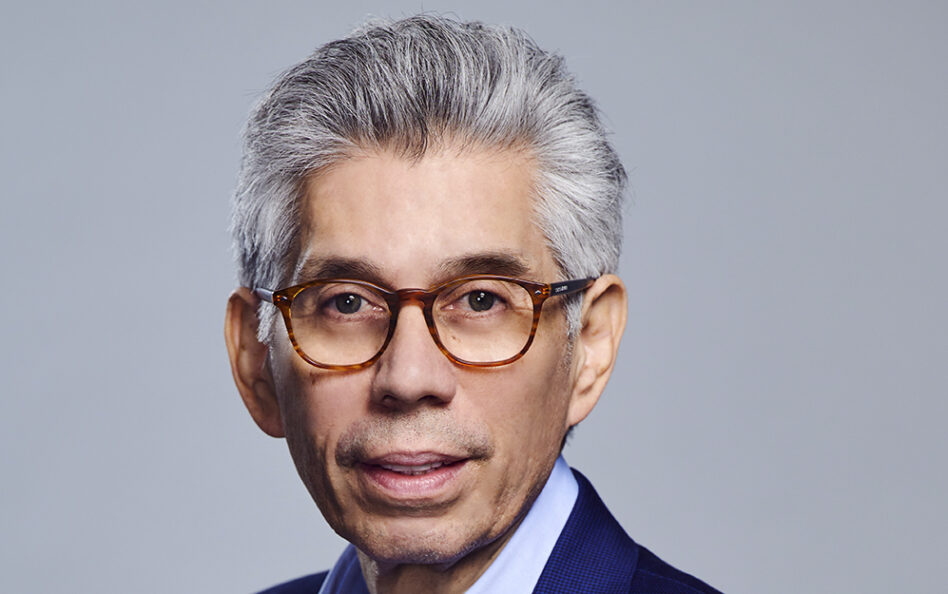
Daniel Coronell: “We cannot compete for clicks or confuse virality with truth”
Daniel Coronell, President of Univision News, considers today’s media landscape “extremely interesting” because of the multiplication of platforms available for delivering news. However, this creates a responsibility to produce the same journalistic quality the industry has delivered over the years, “but in different formats, giving people access in different ways and, above all, fostering journalism that is first interactive, second open, and third with a strong emphasis on community.”
As President of Univision News, Coronell oversees more than 2,000 hours of informational content each year, including news programs, investigative journalism, and magazine-style news shows.
He explained that, unlike media outlets elsewhere in the world, *Noticiero Univision* is directed at a community within a country, “and this is no small responsibility, because what we must do is not only inform people with the daily news but also give them tools to live in this country, especially at a time when immigrants face major challenges. This requires us to inform in multiple and timely ways and not settle only for chasing daily news but also fulfilling the duty to cover what is happening. There is a huge commitment to community service that transcends all the platforms through which we express ourselves.”
COMMUNITY SERVICE
Serving the community is a key aspect for Coronell. He noted that technology is being shared between the network and local stations, as well as among the stations themselves. “This gives us tremendous strength and power to deliver information not only on time but also with clarity and depth, developed in a way that connects with people’s everyday lives,” he said, citing deportation operations as an example that has led them to work across platforms to meet these needs and to demonstrate the importance of local journalism for audiences.
He stressed that people must understand that many things have changed and that many now get their news through their phones. “Journalism must know how to reach people through these (relatively new) devices, but it must never lose its essence. I believe that if journalism maintains its commitment to information and service to the community, it will always have a bright future. What we cannot do is compete for clicks or confuse virality with truth. We must do the job well to remain relevant.”
APPOINTMENT TELEVISION IS DISAPPEARING
He pointed out that we are living at a time when the two founding principles of the traditional news model are disappearing: TV tied to specific times and advertising as the main source of funding, embedded in programming breaks.
“First, because the vast majority of people no longer accept the invitation to watch at fixed times. The news hour is whenever I want to watch the news. Second, I think ads need to be integrated differently so that they don’t produce repetitive experiences, because that habit, which lasted for decades, is disappearing from the way people consume information daily,” he said.
He explained that all of this has led to changes in different formats. “But this is a more direct, super complex problem, because we’re on a plane mid-flight and we can’t land to make changes. We must continue with our commitment to deliver the best quality to our audiences across all platforms,” he said.
SOCIAL MEDIA CREATES ADDITIONAL CHALLENGES
He highlighted that this situation creates further challenges such as verification and the reliability of news: values that are very important for journalism but are becoming confused with others brought by social media, where credibility often gets mistaken for plausibility.
“Social media is built in such a way that people feel connected to the whole world, but in practice they are isolating themselves because the architecture is based on how they use it. Due to this selectivity of messages, people may start hearing only the information they agree with, and the media can become an echo chamber of their own thoughts and, at times, prejudices. Journalism is the opposite. Journalism must give space to multiple perspectives so that citizens can form their own vision of what is happening,” he said.
He added, “We are in a stage of transition that may last years, in which journalism will survive, TV will survive. But we need to ensure that the work we do has significant added value for people, so they can tell the difference between journalism and propaganda or lies or the pursuit of truth. In that sense, a great effort must be made to preserve journalistic standards. We must learn to vary communication styles to reach across all platforms, but we cannot lose the principles—and that is a major challenge in this stage.”
TECHNOLOGY CHALLENGES
He added that in the past you could believe half of what you saw, but with the emergence of artificial intelligence (AI), it’s now almost nothing. “These types of technological disruptions require a greater journalistic effort, more verification and cross-checking, so that what we deliver to people is better. Our work demands much greater effort to make contacts, cross-check, conduct rigorous verifications so that people receive the truth or something as close as possible to it,” he said.
Coronell pointed out that news outlets may not always be first, but “sometimes they have the duty to be last, to understand what race we’re running—not the race to be first but to be better and more thorough. Now we must learn that the essential duty is to come out complete and come out better,” he emphasized.
Despite the challenges, he stressed that he considers new technologies “wonderful.” He revealed that Univision News is frequently experimenting with artificial intelligence to eliminate tasks traditionally considered “clerical or mechanical” that used to take up too much time and did not require a reporter. These tasks “can be done relatively well with minimal supervision, like transcribing a long interview or searching for keywords in an interview. Tasks that once took hours now take minutes, with improving quality. With augmented reality we’ve also gained a lot, because it allows us to simplify video and audio while showing what’s essential. To a large extent, the work of a journalist is to prioritize, to select elements to tell a story and then combine them,” he said.
NEW SPECIAL REPORTS
Coronell said Univision News has been working on a series of special reports that highlight major world events from an everyday perspective.
“We already did something significant after the election of the Pope, showing the personal importance for Latin America and Hispanics of how the Vatican functions. Now we’re working on an investigative project related to Christmas in the Holy Land. Celebrating Christmas during a very turbulent time for the Middle East, for the holy places—for example, the Church of the Nativity, which is part of tradition because it is where Jesus was born. What is happening in these holy areas in the middle of war? We are working on that for a special program. We also worked on in-depth journalism this semester, including a special on Alcatraz Alligators from multiple perspectives,” he said.


Diario de Hoy
|
viernes, 23 de octubre de 2026 |

