
U.S. HISPANIC Versión en español
Javier Pons of Telemundo: “Agreement With Mediapro Is Based On The Goal Of Diversifying Our Productions”
4 de octubre de 2025
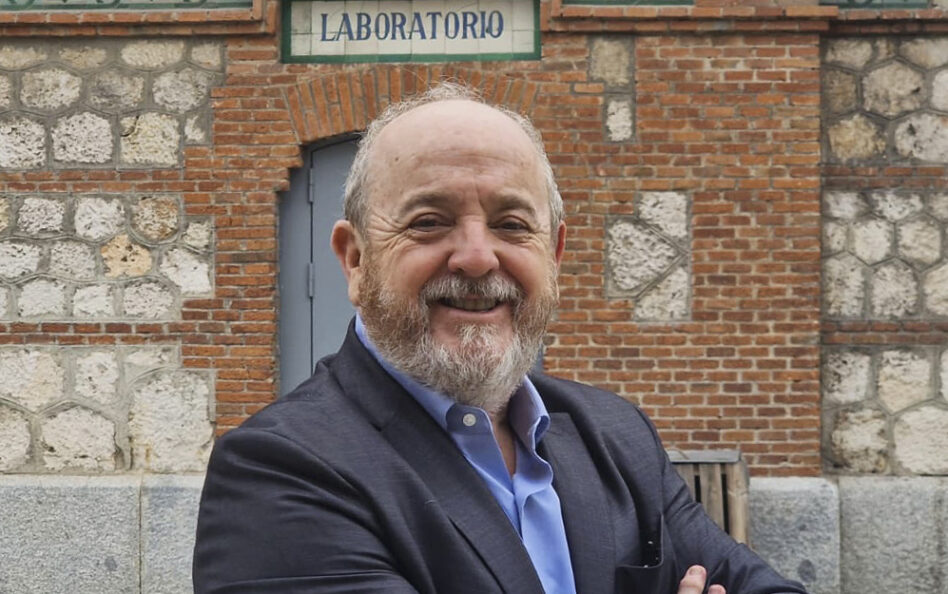
Javier Pons, Chief Content Officer & Head of Telemundo Studios: "We want to start opening up our own catalog of properties"
The new agreement signed between Telemundo Studios and The Mediapro US & Canada is based on Telemundo Studios’ objective, pursued over the past year, of diversifying its productions.
“Before, we only made long-running series for the network, and for the past year we’ve been producing short-form series for streaming, docuseries, and movies. We want to start opening up our own catalog of properties. Several potential partners have approached us, one of them Mediapro, which I obviously know very well for obvious reasons (Pons was part of Mediapro until a year and a half ago),” said Javier Pons, Chief Content Officer & Head of Telemundo Studios, in an interview with PRODU during Iberseries & Platino Industria 2025.
Pons recounted that Mediapro invited them to join the project with Jaime Camil, who for Telemundo is one of the stars “that fulfills several of the factors required for content of interest to U.S. Hispanics: he is very well-known in Mexico, of course, but also very well-known in the U.S. He has worked with Hollywood stars and has a strong acting presence.”
He also noted that Cinépolis was already one of the partners in the project, and Telemundo had worked with them a year ago on the film Casi al Paraíso, “which was our first venture into the co-production of films,” Pons added. He said they have already begun filming the first title of the alliance, Catch Me If You Can (Atrápalo Quien Pueda), starring Jaime Camil, and will announce other projects as deals are finalized.
He emphasized that the agreement with The Mediapro Studio US & Canada and Cinépolis “was easy, quick, and fruitful.”
LATINO UNDERREPRESENTATION IN AUDIOVISUAL MEDIA
Pons stated that Telemundo Studios’ role is “to give our opinion, add our perspective on what we expect from this film for the Hispanic market. Telemundo is not just an entertainment brand; it is a cultural destination for all Hispanics, and this film has to go beyond, literally, the screen and win over that audience, so that the importance of the Hispanic population in the U.S. is matched by the relevance of the projects. I would even say that Latinos are underrepresented in all things audiovisual, and I believe this is one more step in the fight against that,” Pons said.
He explained that in order to “go beyond the screen in the U.S.,” Telemundo now has a “huge and new tool,” which is its full range of digital platforms.
He recalled that in the past, companies like Telemundo lived in a “very defined universe in which they were surrounded by their own media, their own digital devices. But what Telemundo has done over the past year, and will continue doing even more, is ensure all its content lives organically across all digital distributors. When we write a story now, we already want it to be able to exist digitally, whether in vertical format for TikTok, as streaming content for Peacock, or on our own Telemundo app. In other words, it’s a way of going beyond and reaching Hispanics who, as I said before, are much more active and more decisive consumers when it comes to devices, especially mobile.”
LIVE TV AND INTELLECTUAL PROPERTIES
Pons stressed that one of Telemundo’s two main pillars is live programming. “Telemundo produces more than 5,000 hours of live TV each year, and I think that’s our greatest tool to compete with the world of streaming. It’s our big competitive advantage. We know how to do it. We’ve been doing it for 40 years, and we will continue doing it. Therefore, doing live TV and broadcasting it live so that it reaches audiences, both through our linear channel and across all social networks and digital devices,” he said.
The second major pillar: Telemundo Studios “as the generator of the company’s intellectual property within NBCUniversal Telemundo Enterprises. We believe the future of this company depends on its intellectual properties, and within this combination—supporting live programming on the linear side and supporting the creation of original IPs in series, films, and docuseries—we have the perfect alchemy to move forward and play offensively, which is Telemundo Studios’ main strategy,” he emphasized.
WORKING ON TWO FRONTS: TV AND STREAMING
Pons mentioned that Telemundo Studios operates on two fronts: linear TV and streaming. “There is no longer a priority given to the former. Our long-running series first air on Telemundo, but then immediately move to Peacock, that is, to streaming. Therefore, when we create, we have to think of that streaming platform, or even another platform that isn’t NBC-owned, like Netflix. We have a long history of collaboration with Netflix, which in the past included La Reina del Sur and El Señor de los Cielos. We’ve also worked with Disney and Amazon. Now we no longer work solely for a linear screen. The conception and development are already designed for both worlds to coexist,” he concluded.


Diario de Hoy
|
viernes, 23 de octubre de 2026 |
Noticias relacionadas (4)

26 de septiembre de 2025
Javier Pons: “Dinastía Casillas Reflects The Redefinition of the Crime Genre”

1 de abril de 2025
Javier Pons Promoted to Chief Content Officer & Head of Telemundo Studios