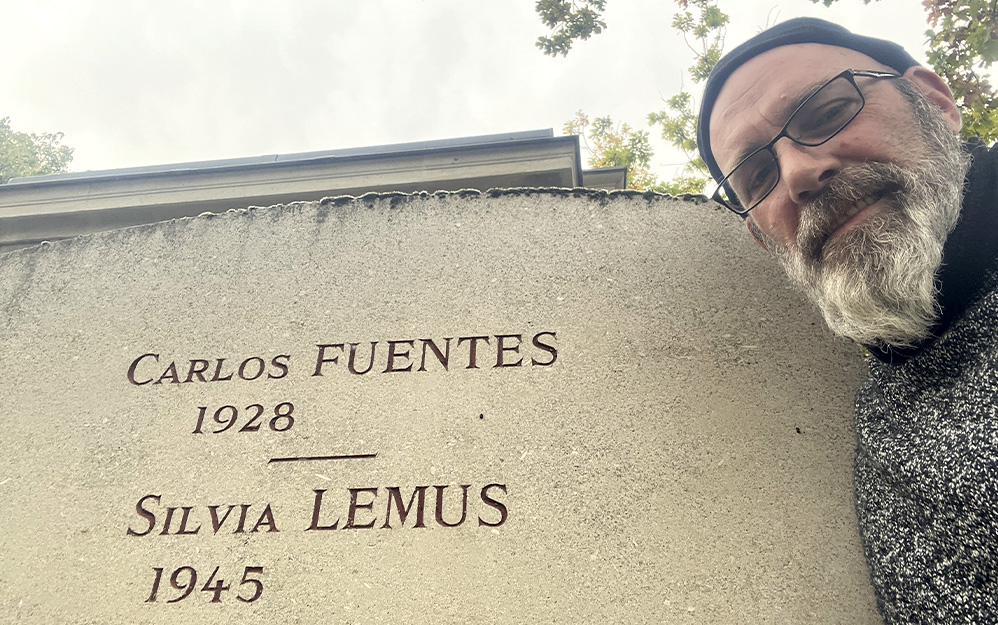
Sebastián del Amo noted that La Muerte de Artemio Cruz is one of the works that solidified Carlos Fuentes as the great writer of his generation
Director, producer, and screenwriter Sebastián del Amo, of Cine Qua Non Films, is in charge of adapting the Mexican novel La Muerte de Artemio Cruz (The Death of Artemio Cruz) by Carlos Fuentes for the big screen. The project, commissioned by Jimena Rodríguez, Head of Latin America at Wild Sheep Content, is currently in the phase of securing incentives from the Mexican government through Eficine, which “is an important first step, it’s the seed,” Del Amo told PRODU.
He recounted that just a week after locking in the project with Rodríguez, he delivered the first script treatment, which was very well received due to its tone. From there, the work began. “It was a process that took several months. I’m very happy with the result. This script, I think it’s the best work I’ve done. What I did was take the essence \[of the novel], translate it into cinematic language, and in the end we ended up with an extremely entertaining script that has a bit of everything: melodrama, adventure, a lot of Mexican Revolution history. It has a lot of Orson Welles’ cinema in it, film noir,” said Del Amo.
For Del Amo, this is an important challenge—one he feels honored to take on. He noted that The Death of Artemio Cruz (La Muerte de Artemio Cruz) is one of the works that solidified Carlos Fuentes as the great writer of his generation, part of what became known as the Latin American Boom.
Although he can’t share many details at this stage of the project, Del Amo said that filming is expected to begin in the second half of 2026, with locations planned in Mexico City (Distrito Federal), Puebla—where the character’s adult life takes place—and Durango, where his youth as a soldier unfolds.
Del Amo has directed three films: his directorial debut El Fantástico Mundo de Juan Orol (2012), the box office hit Cantinflas (2014), and El Complot Mongol (2018–2019).
To conclude, Del Amo said he is “truly honored” that Ximena offered him this enormous challenge, and he believes the film has the potential to succeed both on the festival circuit and commercially. “The idea is to create a rich, substantial project that performs well across the entire film industry spectrum. This notion that festival films can’t also be commercially successful strikes me as absurd,” he declared.