U.S. HISPANIC
Javier Osorio of Círculo Creativo USA: “When the Connection Is Authentic, Culture Amplifies — Not Segregates
Claudia Smolansky | 10 de febrero de 2026

Javier Osorio, Vice President of Círculo Creativo USA
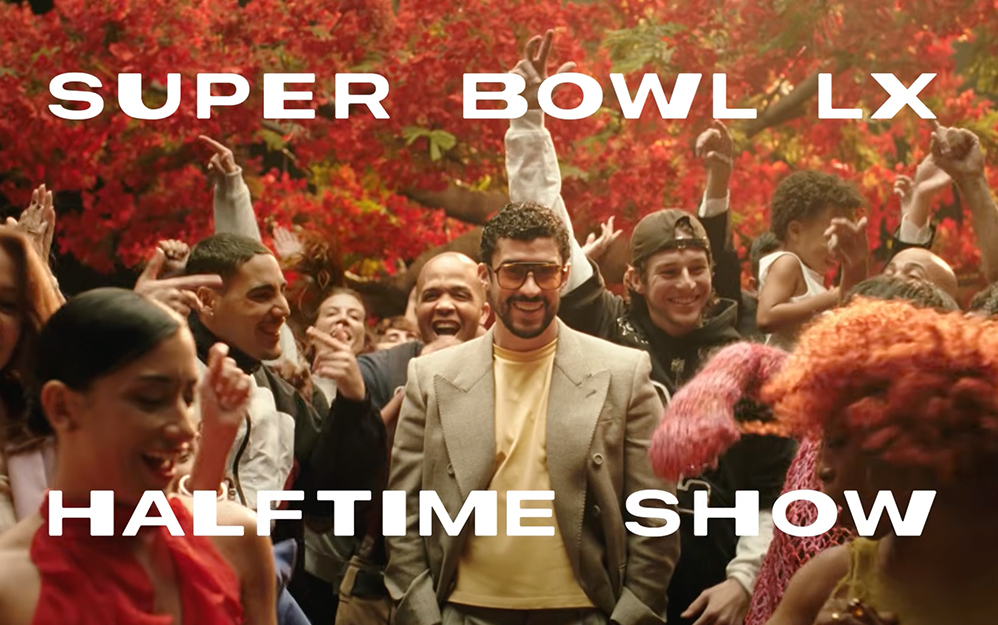
The inclusion of Bad Bunny in a major halftime show is less about ethnicity and more about generational relevance. That’s the view of Javier Osorio, Vice President of Círculo Creativo USA, who believes the artist’s cultural impact lies in authenticity rather than representation by category.
“Bad Bunny represents pure authenticity,” Osorio said. “That’s what makes his Latinidad so powerful—it doesn’t fit into a single cultural box. It connects naturally with diverse audiences.”
According to Osorio, the decision to feature Bad Bunny should not be interpreted as an attempt to “bring Latinos to football,” but rather as a strategic move to connect the sport with Generation Z, a cohort defined by multiculturalism and fluid cultural codes.
“Gen Z doesn’t consume culture through predefined stereotypes,” he explained. “They connect through shared codes. Bad Bunny doesn’t resonate because he’s ‘speaking to Latinos,’ but because he’s genuine. And authenticity is what this generation responds to.”
For brands, the takeaway is clear. “This is not about including culture as decoration,” Osorio said. “It’s about understanding what truly moves audiences today. When the connection is authentic, culture doesn’t segregate—it amplifies.”
AI, Hyper-Segmentation and the End of the ‘General Latino’ Campaign
Looking ahead, Osorio sees artificial intelligence as a transformative force in creativity—particularly in marketing aimed at Hispanic audiences. But not in the way many brands currently imagine.
“The biggest impact of AI will be real hyper-segmentation,” he said. “We’re very close to a scenario where technology doesn’t just adapt assets, but dynamically designs and optimizes them for specific Hispanic audiences.”
Rather than broad campaigns “for Latinos,” Osorio predicts a future of deeply localized messaging, tailored by country of origin, accent, and cultural nuance.
“In the near future, we won’t see generic Hispanic campaigns,” he noted. “We’ll see messages specifically for Dominicans, Venezuelans, Mexicans, Argentinians, Chileans. You could scroll TikTok and see an ad like ‘Ño Que Barato!’ in a Venezuelan version, a Chilean version, or a Mexican one.”
This level of precision, Osorio argues, represents a massive opportunity—but also a serious responsibility.
“The opportunity is cultural and contextual precision—speaking to people the way they actually live and talk,” he said. “But that’s also where the biggest risk appears.”
While AI can generate endless variations, Osorio is clear about its limitations. “AI cannot replace human sensitivity, judgment, or intuition,” he warned. “Technology can offer more options, but it’s still the creative’s role to decide which version is right, which one truly connects emotionally, and which one crosses a line.”
For Osorio, the future lies in balance. “AI should be used as an amplification tool, not as a substitute for creativity,” he concluded. “Without sensitivity, messages become irrelevant and sterile. Creativity is still—and will remain—a deeply human act.”

Etiquetas

Contactos

Empresas


Diario de Hoy
|
viernes, 27 de marzo de 2026 |