
U.S. HISPANIC Versión en español
Telemundo Studios: “There Is A True Revolution In Content Production”
Maribel Ramos-Weiner | 23 de enero de 2025
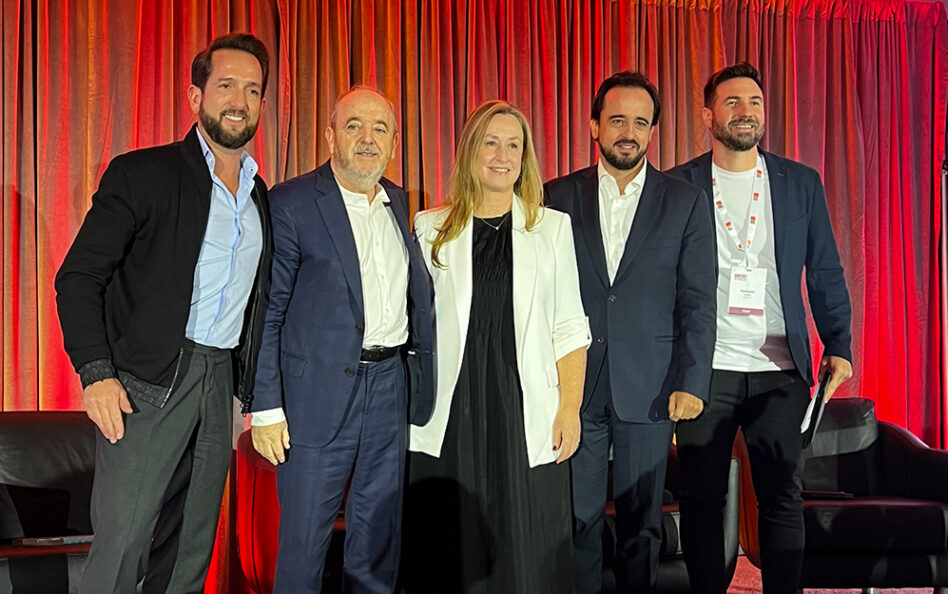
Raúl Berdonés, founder and executive chairman of Secuoya Content Group; Javier Pons, EVP of Telemundo Studios; Marta Ezpeleta, CEO of The Mediapro Studio; Samuel Duque, president of TIS Studios; and Gonzalo Larrea, co-editor of C21
Optimism about the future of Spanish-language content production was the prevailing sentiment among the panelists during the State of the Latam & Hispanic Nation discussion. The panel featured Marta Ezpeleta, CEO of The Mediapro Studio; Raúl Berdonés, founder and executive chairman of Secuoya Content Group; Javier Pons, EVP of Telemundo Studios; and Samuel Duque, president of TIS Studios. Gonzalo Larrea, co-editor of C21, moderated the session.
Pons from Telemundo Studios highlighted a “true revolution in content production,” noting that the sector has grown by 50% in recent years. He emphasized the importance of adaptation, with each project having a tailored business model. He mentioned upcoming unscripted projects for Telemundo Studios this year, including La Jefa, the adaptation of Atresmedia’s Velvet for the Hispanic Market, and the spin-off of El Señor de los Cielos, Dinastía Casillas.
STREAMERS’ OPENNESS ENABLES WINDOW-SHARING
Berdonés from Secuoya noted that production levels remain strong and costs are stabilizing. He emphasized the growing openness of streamers, which allows for a “windowing model where platforms share distribution rights.” He advised keeping an eye on co-production opportunities and continued investment.
Ezpeleta from Mediapro shared a similar optimistic outlook. “By 2025, I’d like to think that production flexibility will open up many options. Exploitation windows give content broader reach,” she stated.
Duque from TIS Productions urged a return to enthusiasm, encouraging stakeholders to “embrace change and the adrenaline it brings. Keep investing—it’s a great time, despite the necessary rationalization we’ve seen. We need to focus on budgets and leverage our IP,” he said.
The discussion also touched on the relevance of free-to-air TV. Pons from Telemundo Studios remarked, “Free-to-air TV is more alive than ever and is producing more scripted content than five years ago.”
Berdonés added that it’s essential to continue telling compelling stories and leveraging the talents recognized locally. He noted that content language is neither a limitation nor a competitive edge, citing the global success of the Korean series The Squid Game as an example.
The panelists emphasized that a story must be meaningful for it to succeed in different markets. Ezpeleta referred to productions like Las Pelotaris, which was a hit in both Spain and Latin America via ViX. She also recalled past successes from Mediapro, such as El Internado and El Barco, “which traveled worldwide.”
SHORT FORMATS AND ENGLISH-LANGUAGE PRODUCTION
Other topics included the production of high-quality short formats, such as Digi-novelas with one-minute episodes, which are popular in Asia and the U.S. Ezpeleta noted that Mediapro is exploring ways to improve the quality of such content. Duque shared that TIS Productions already has two projects with Asian and American companies, adopting a professional approach.
English-language production was another highlight. Berdonés from Secuoya revealed the company’s goal of having 30% of its projects in English by 2025. Ezpeleta added that, under a project led by JC Acosta, the objective is to “double our presence in the English-speaking market. The U.S. market is now open to this type of content,” she said.

Panel State of the Latam & Hispanic Nation


Diario de Hoy
|
miércoles, 1 de abril de 2026 |
Noticias relacionadas (4)


