U.S. HISPANIC Versión en español
TelevisaUnivision: “Doménica Montero Shows The Path To An Alternative Direction For The Classic Telenovela”
Maribel Ramos-Weiner | 12 de diciembre de 2025
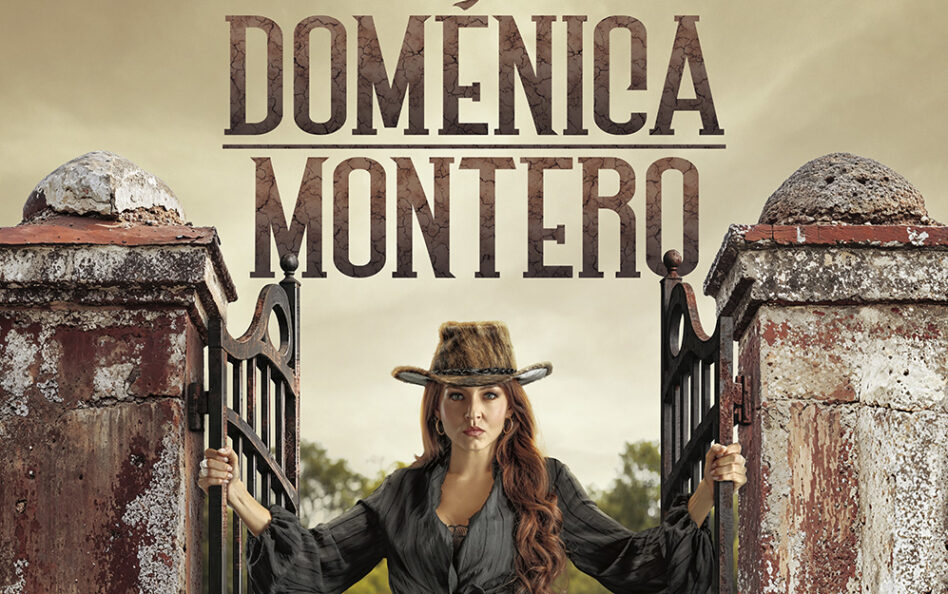
Doménica Montero (50x60’) premiered on Monday the 8th in the U.S. on Univision at 9pm
TelevisaUnivision’s new production, Doménica Montero (50×60’), which premiered this Monday the 8th in the U.S. on Univision at 9pm, “can show a path toward an alternative direction for the classic telenovela and the romance that we’ve sometimes lost a bit,” according to its executive producer, Carlos Bardasano.
Bardasano, who spoke with PRODU about this new version of the classic by Inés Rodena and Caridad Bravo Adams, highlighted that Doménica Montero “is a powerful story. It’s a story of love and heartbreak, of spite and female empowerment. The formula we used was: if Inés Rodena and Caridad Bravo Adams were alive today, how would they write Doménica Montero? Incorporating everything that has changed in the world today. Not only keeping the essence of the original story, but adapting it to where the world will be in 2026 and making it believable for today’s reality. Those were the elements we wanted to play with in this story.”
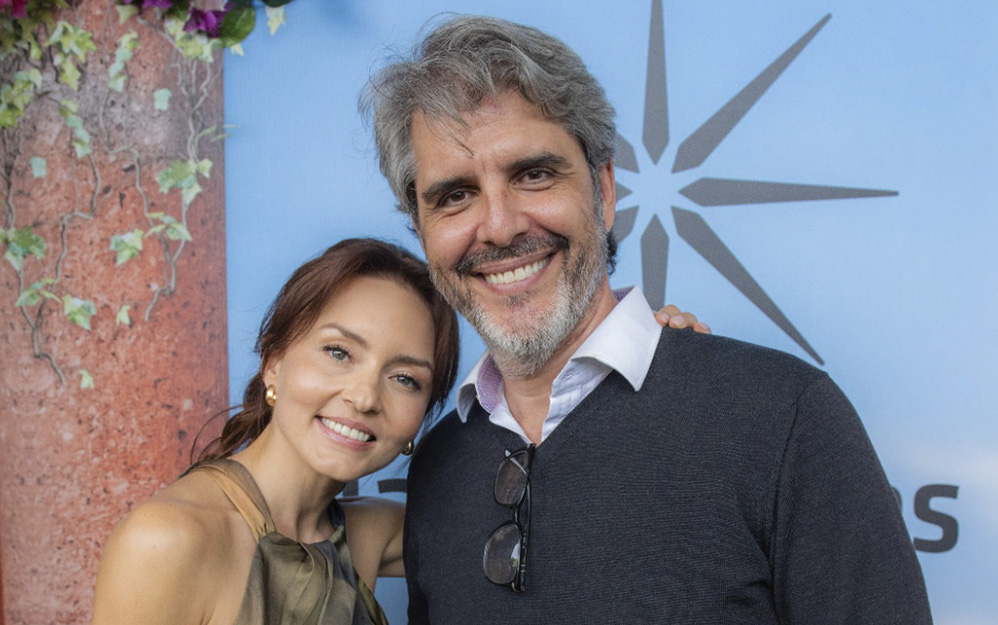
Angelique Boyer, protagonist & Carlos Bardasano, Executive Producer of Doménica Montero
He explained that the first version of the telenovela was produced by Valentín Pimstein for Televisa in 1978, a year before Los Ricos También Lloran. Rodena’s novela was originally a radio drama, and Pimstein asked Caridad Bravo Adams to adapt it for television.
“I don’t know if it’s ever happened again that we have Inés Rodena and Caridad Bravo Adams creating a story together. It’s something incredibly valuable. Ximena Suárez, who is a genius and who wrote this version of Doménica Montero, went back to the original radio scripts by Rodena and Bravo Adams. Much of what we did was preserve the essence of the original story, which made it so successful at the time,” said Bardasano.
The producer highlighted that this version was structured into 50 episodes. “I think it’s the shortest version ever made, which makes everything more concentrated and more intense. The first episode is incredibly powerful and it never lets up. The story has everything: from the direction, to the cast led by Angelique Boyer with Marcus Ornellas; the great villain of this story, Doménica Montero’s cousin, played by Scarlet Gruber; and Brandon Peniche playing a character we’ve never seen him in before — a spectacular ‘mega-villain.’ It’s a truly stellar cast,” Bardasano said.
MORE THAN 3,500 SQUARE METERS OF SETS
Filming took place on location in Puebla, with the haciendas located in Cuernavaca.
Bardasano commented that Doménica Montero has three directors: Carlos Cock Marín, Juan Pablo Blanco and Carlos Santos. “Three great directors who gave it real flesh and bone,” he noted.
He explained that a particular achievement of this production was the use of two massive stages — San Ángel and Rojo Gómez — to build the interior sets of the haciendas.
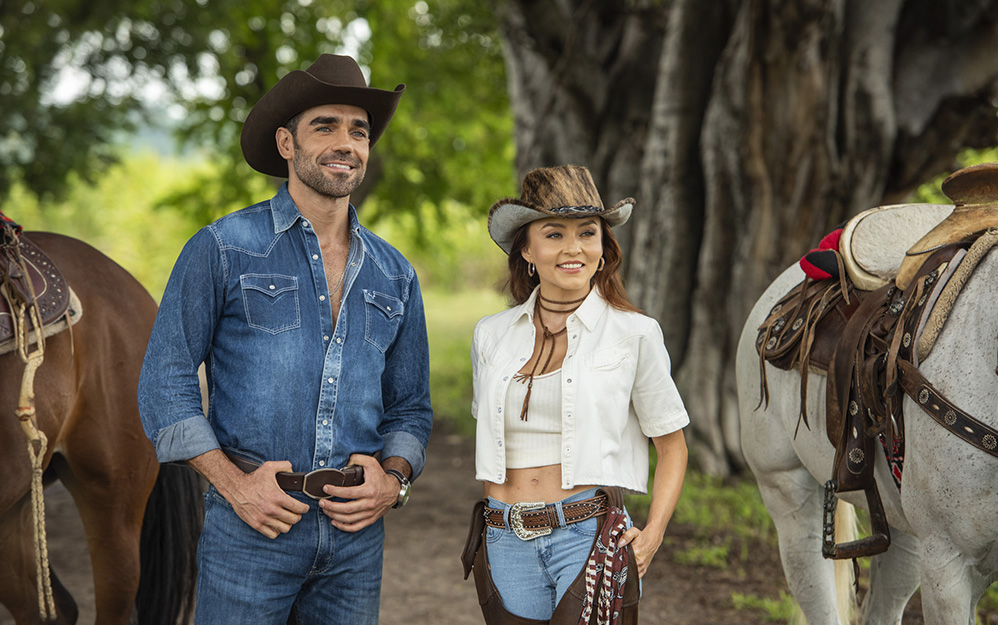
Marcus Ornellas & Angelique Boyer
“For this construction, which was carried out by Televisa’s team led by our Production Designer, Alex Martínez, one of the best in the industry, two huge haciendas were built, each with two stories, inside these stages. More than 3,500 square meters of sets. It’s incredible what was accomplished. Combined with the location shoots, the haciendas, and the landscapes, something epic and full of realism was achieved,” he said, noting that the Rojo Gómez stage is Televisa’s largest.
He added that for Doménica Montero they debuted the Sony BURANO cameras. “We loved the quality they gave us, the ease of handling, and the lenses we were able to use. One of the great things about Televisa is that the company is always at the forefront of the best technologies and gives us the opportunity to explore and try new ones. We had two excellent Directors of Photography who created a very beautiful look,” he said.
A UNIVERSAL STORY
Asked why the story is relevant today, Bardasano explained that it is very universal. “From the moment visual entertainment has existed, this reminds me a lot of the famous moment in Gone With the Wind, when Scarlett O’Hara says, ‘I can’t take it anymore — this is my moment. From now on nobody will ever hurt me again.’ That moment was powerful when the film came out, during the Civil War era, and it remains powerful and valid: the moment when the protagonist says ‘this is it — now it’s my time to shine, to stand up for myself, and to do things the way I believe they should be done.’ Today this is even more valid, especially for women,” he explained.
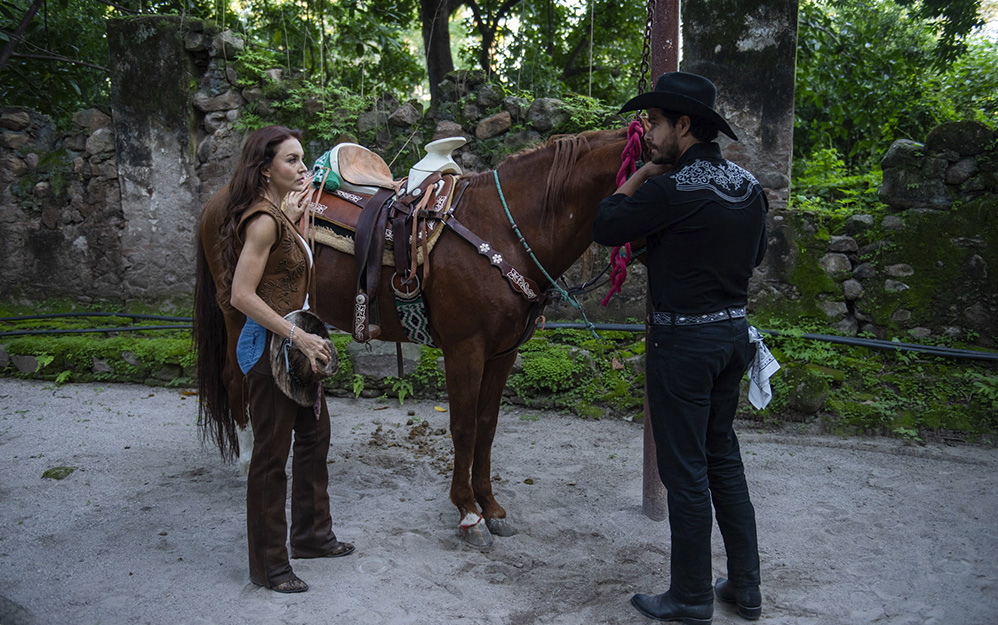
He added that the language crafted for the series, treating the novela with great respect, “generated a rhythm similar to a series. Something beautiful that was achieved across all elements — the script, the cast, the performances, direction, aesthetics, lighting — is that it feels like a great novela from the golden era of novelas, but with modernity and the storytelling style of TV in 2026.”
He concluded by saying that the telenovela is his favorite genre and he believes it is the most powerful and most copied genre in the world. “It’s our only native genre. I feel that Televisa has given us the opportunity to create a huge evolution of the telenovela, and today they are producing the best novelas.”
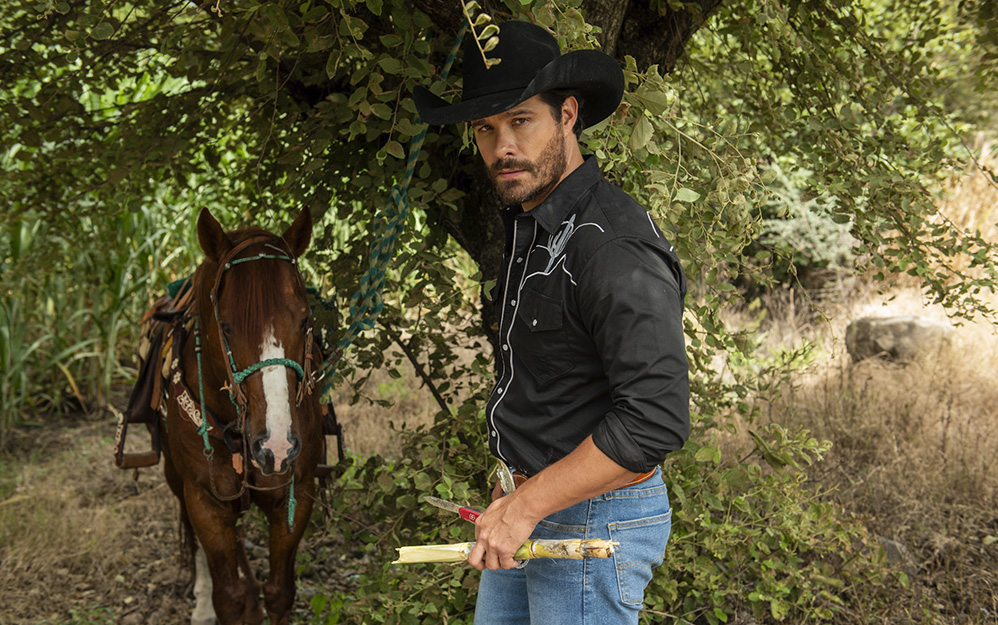
Brandon Peniche


Diario de Hoy
|
miércoles, 25 de marzo de 2026 |