U.S. HISPANIC Versión en español
Leonardo Aranguibel: “I Leave Disney With The Joy Of A Job Well Done And Of Having Achieved Great Accomplishments”
23 de enero de 2026
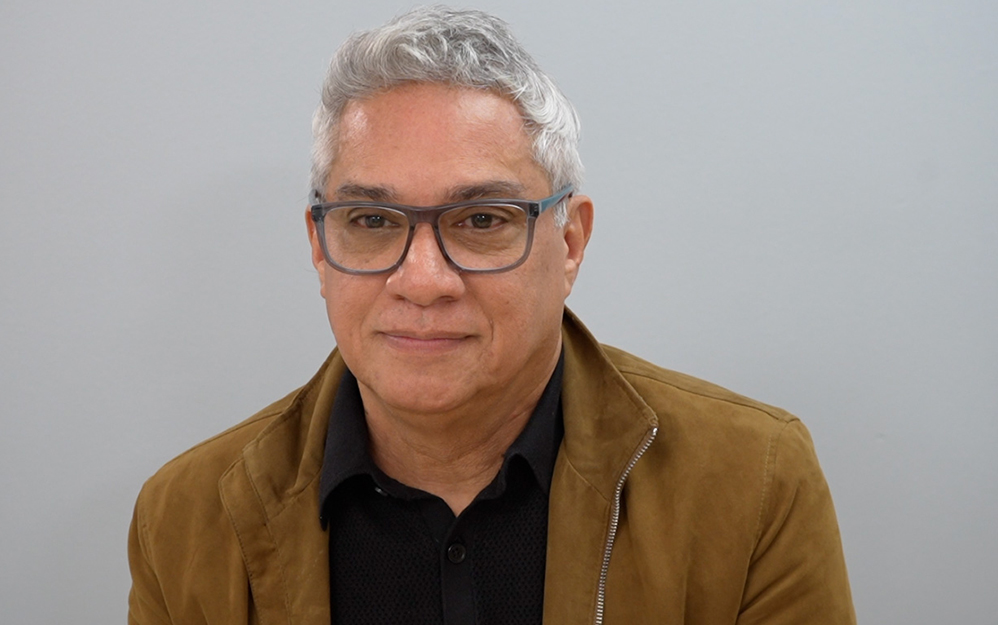
Leonardo Aranguibel
Leonardo Aranguibel is leaving Disney after 21 years, having held several positions—first as Production Manager, then as Director of Production, and most recently as VP of Production and Operations for The Walt Disney Company Latin America, a company he will remain with until February 22.
Aranguibel—an executive, director, and screenwriter—has been a lifelong TV enthusiast and brings 36 years of experience to the industry. He began his career at RCTV, later moved to HBO Latin America Group in its Venezuela offices, and then relocated to Miami 24 years ago, where Fernando Barbosa of Disney Latin America recruited him to help lead the company’s new adventure: local production.
In a #PRODUprimetime special with Ríchard Izarra, Aranguibel said he is leaving the company with the joy that comes from a job well done, the satisfaction of having achieved major successes, and the pride of having worked with extraordinary teams—people who together created things they can all be proud of.
“When I started working at Disney, we managed to change the company worldwide because Disney produced very little internationally—there were only a few exceptions in Europe or Asia. That’s why the experience led by Diego Lerner, may he rest in peace, to whom I owe so much and whom I continue to hold dear, along with Fernando Barbosa, was exceptional, innovative, and completely new,” Aranguibel said.
He believes that this, along with the outstanding performance in Latin America, led to Lerner later being appointed President of The Walt Disney Company in Europe, the Middle East, and Africa (EMEA).
Once there, in 2009, local production also began in Europe, and that responsibility fell to them without relinquishing their duties in Latin America. They began producing content for the Netherlands, Norway, Finland, Italy, France, and Israel.
This, in turn, encouraged teams in Asia to begin producing as well, and they turned to Aranguibel and his colleagues, eventually involving them in major markets and collaborations with peers from that region.
“That created an impact felt across the entire world—one the company still lives with today—and I am very proud to have led, from an operational standpoint, a project that Diego and Fernando guided from the corporate perspective,” he added.
THREE STAGES AT DISNEY
Aranguibel explained that his time at Disney clearly unfolded in several distinct stages. The first involved creating local versions of major hits in the company’s catalog, such as Desperate Housewives, a global success sold in 210 markets. Local versions were produced for Argentina, Brazil (starring Sonia Braga and Luz Celia Santos and produced by Fabio Barreto), Univision, and for Colombia and Ecuador.
He also recalls the local version of Grey’s Anatomy, A Corazón Abierto, which he himself labeled a “super series”—a term coined because it retained the production values of a series while having a length closer to that of a telenovela.
They also produced local versions of Revenge and Brothers & Sisters, among others.
The second stage came when they began producing original local content, starting with the extraordinary success of Hasta Que Te Conocí, the biopic of Juan Gabriel. The series unleashed a massive wave across the industry, with such overwhelming success that some channels doubled their usual ratings.
“This second stage—the beginning of our original productions—left us very well prepared as a company, as executives, and as a creative group for the third stage, which came when Disney acquired FOX. That merger brought together the original FOX team and introduced Mariana Pérez, Fernando Semenzado, and Santiago de Carolis, coinciding with the launch of Disney+ and Star+, and later the combination of both. At that point, my role became more supervisory, focused on operations and strategy, alongside Barbosa, working with the team developing the projects,” he explained.
NEXT STEPS
His first step in this new phase is to slow down the pace of “the meat-grinding machine that is the industry,” particularly at the decision-making level he has been part of in recent years, and to focus on many personal things he had set aside.
For example, he greatly enjoys writing—something he postponed for many years—and would now like to dedicate time to it, something he couldn’t fully do while at Disney, despite trying several times.
While he does not rule out continuing in the industry in a different capacity, it will depend on the phone call he receives. “I don’t plan to make any calls myself, but if I receive one, of course, as I always have, I’ll take it with affection and listen,” he said.
He also doesn’t rule out continuing to produce and generate ideas, as he comes from a creative background and trained as a director and screenwriter before joining HBO, where his role became increasingly executive.
He acknowledges being open to listening, guided by one of his favorite sayings: “never say never,” though he is not interested in repeating past experiences. He emphasized that every change in his life and career has been for the better.
SPECIAL PEOPLE
For Leonardo, two people have been especially important in his career: the aforementioned Lerner and Barbosa, who brought him to Disney and supported him greatly—though he admits they had disagreements and clashes that he always handled privately and with respect. “I told him that I believe I’m more valuable to you by telling you the truth than by telling you what might please you, which is something many people do. I’ve never been that way, and I’m glad I’ve gone through my entire career like that, both at HBO and at Disney.”
MEMORABLE MOMENTS IN HIS CAREER
One was convincing Juan Gabriel to agree to his biopic, as the artist initially wanted nothing to do with the project until he crossed paths with Mary Black, who knew him and became the key connection.
Leonardo wrote a screenplay accompanied by a personal letter that moved Juan Gabriel even more than the script itself. He later met with him in the kitchen of his home—a moment he remembers as unforgettable.
Another cherished memory was a project he created with his daughter Lia during the pandemic: a short film titled La Peste del Insomnio, inspired by and incorporating original texts by Gabriel García Márquez from One Hundred Years of Solitude. The project featured major Latin American stars and won international awards, along with reviews in prominent regional and national media outlets.
The executive closed the interview with the phrase that opens this project: “The sun will rise again. It always does.”

Contactos


Diario de Hoy
|
lunes, 28 de septiembre de 2026 |
Noticias relacionadas (17)