U.S. HISPANIC
Flor Leibaschoff of BeautifulBeast: “The Latino Voice Is No Longer Background Noise”
Claudia Smolansky | 10 de febrero de 2026
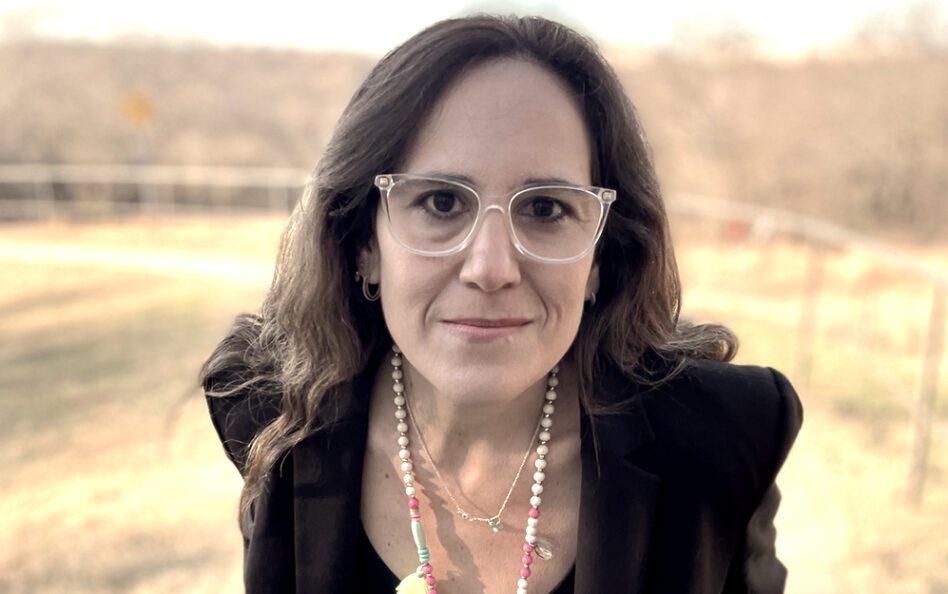
Flor Leibaschoff, Co-Founder and Chief Creative Officer at BeautifulBeast
The impact of Bad Bunny’s Super Bowl 2026 halftime performance goes far beyond entertainment. For Flor Leibaschoff, Co-Founder and Chief Creative Officer at BeautifulBeast, the moment represents a deeper cultural shift: the consolidation of Latino voices at the center of American culture, business, and public conversation.
“The Latino community is no longer submissive,” Leibaschoff said. “It never fully was, but for a long time our presence was read as noise—we were loud, yes, but not necessarily visible in the spaces where real decisions are made. That has changed.”
According to Leibaschoff, this shift is not driven by trend or marketing strategy, but by necessity. In a political climate where questions of belonging, value, and legitimacy resurface, silence is no longer an option.
“There’s a real urgency to occupy space,” she explained. “Being present quietly is no longer enough. Latinos are more active in media, on the streets, and in public conversation because the moment demands it.”
Bad Bunny, the Super Bowl, and a Cultural Inflection Point
For Leibaschoff, Bad Bunny’s Super Bowl performance is a clear marker of this cultural turning point. While more than 135 million people watched the halftime show, a politically driven alternative event reportedly drew only 5 to 6 million viewers.
“The difference isn’t just numerical—it’s cultural,” she said. “It shows where attention lives today. And where attention goes, conversation follows.”
That reality carries a direct lesson for brands. “This isn’t about political alignment or ‘supporting Latinos’ because it looks good,” Leibaschoff noted. “It’s about understanding where the cultural and economic pulse is. The conversation is no longer on the margins—it’s at the center.”
She pointed out that organizations like the NFL recognized this shift early—not out of altruism, but through data. “Behind these decisions there’s no romanticism. There’s business intelligence,” she said. “Audience and engagement reports consistently show that Latinos drive real growth, brand loyalty, and audience expansion.”
The numbers support that claim. The Latino economy in the United States currently generates between $4.0 and $4.1 trillion annually. If measured as a standalone country, it would rank as the fifth-largest economy in the world.
“That changes everything,” Leibaschoff said. “How brands negotiate, how they communicate, how they represent a community that stopped being an ‘emerging target’ and became a core engine of growth. This isn’t just about identity—it’s about real power.”
AI, Creativity, and Cultural Relevance
As artificial intelligence continues to gain prominence in Super Bowl advertising—from digital activations to personalized experiences—Leibaschoff sees opportunity, but not division.
“I don’t see a real difference between Hispanic and non-Hispanic audiences when it comes to using AI tools, and I don’t think there should be one,” she said. “What still makes the difference are ideas and cultural relevance. Technology is part of the how, not the what.”
For her, AI is neither a threat nor a replacement for creativity. “AI is here, and it’s a great tool—it’s simply another member of the team,” she explained. “But it doesn’t replace ideas or creative sensitivity. It enhances execution when there’s a strong cultural insight behind it.”
Leibaschoff also views the Super Bowl ad block as a broader cultural barometer. “Just like the day after Black Friday helps predict the retail year, Super Bowl advertising shows us what’s happening in U.S. society,” she said. “This year, there was a stronger presence of promotions, which makes sense given inflation and its impact on everyday life.”
Latinos, she added, are uniquely equipped to navigate these realities. “We’ve seen this movie before,” she said. “We’re used to complex economic contexts and to using creativity as a survival tool. That’s part of our culture—and this year’s Super Bowl reflected that more strongly than ever.”
Ultimately, Leibaschoff believes the moment calls for confidence, not caution. “This isn’t about a successful show or a fleeting wave of enthusiasm,” she concluded. “It’s about a community that understands that when the world asks you to justify your place, the answer isn’t to shrink—it’s to expand. The Latino voice no longer asks for permission.”

Etiquetas

Contactos

Empresas


Diario de Hoy
|
jueves, 16 de abril de 2026 |