
U.S. HISPANIC Versión en español
Hispanic Television Summit: Returns October 20 in a More Condensed Format but with the Same Relevance as Previous Years
Maribel Ramos-Weiner| 12 de septiembre de 2025

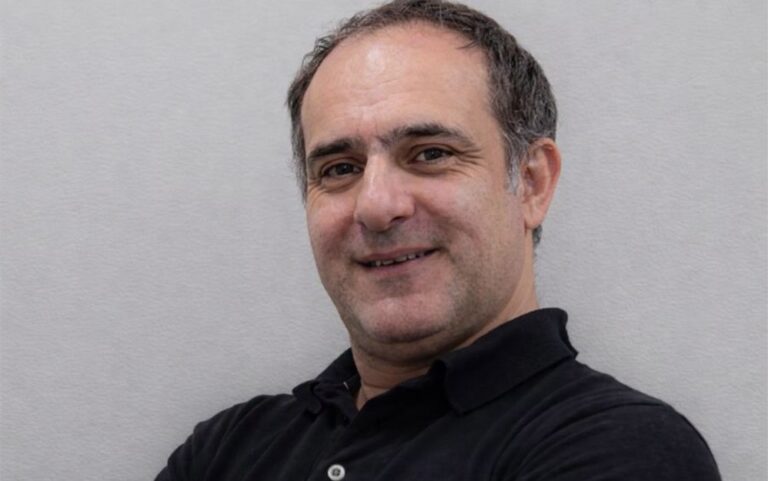
Joe Schramm, Managing Partner & President, Schramm Marketing Group
This year marks the 23rd edition of the Annual Hispanic Television Summit, presented by Kivi TV, on Monday, October 20, at the Marriott Marquis in Times Square, New York. Unlike previous years, the Summit will be much more compact, running from 11:30am to 2:30pm, but will still feature the same level of relevant content and networking opportunities for the U.S. Hispanic TV industry.
Joe Schramm, Managing Partner and President of Schramm Marketing Group, organizers of the event, told PRODU about the ongoing relevance of the Summit as a truly unique opportunity for “people from all areas of the Hispanic TV industry to come together in a relaxed and cordial atmosphere, before the week really gets underway.” The theme of this year is Content, Culture, and Connection.
“Our event is a condensed program, because we know people will be very busy that week with the NAMIC conference and the Walter Kaitz Foundation event, both happening the following days in the same hotel. All of this is part of the cable industry’s Leadership Week (The WICT Network Leadership Conference). Likewise, the NAB Show New York will take place the rest of the week, just a few avenues west in Manhattan,” Schramm explained.
He added that people have already gotten used to the fact that the world has changed and now consumes more short snippets of information. “In my 23 years producing conferences, I’ve seen that attendees prefer shorter programs. So this year we’re testing it: it will be very condensed, but we’ll still include many of the same topics,” he said.
A UNIQUE OPPORTUNITY TO GATHER AND TALK ABOUT HISPANIC TV
He indicated that the first reason he considers it important to attend this year’s Annual Hispanic Television Summit is because it is a “great opportunity” to network, meet, and talk specifically about TV for Hispanic audiences.
The second reason, he said, is that since it’s such a busy week in New York for the television industry, this is the “only opportunity” they will have to talk specifically about this important segment of TV and the industry: Hispanic TV. “Hispanic TV is a very profitable part of the global television industry, and it’s also very important. The Hispanic segment in the U.S. represents a large share of the entire TV industry. It generates a lot of profit, a lot of revenue. It’s an audience that cannot be ignored. That’s why this is an opportunity for those coming to New York for all the other conferences that week: a great occasion to talk specifically about Hispanic TV. And that makes it very unique. There are no other opportunities to do so,” he pointed out.
Schramm noted that the third reason is that this conference “truly delivers value.” He recalled that it is the longest-running conference of its kind. “It doesn’t stay relevant for 23 years if it doesn’t deliver real value to those who attend. People who come to the Hispanic Television Summit each year leave having learned something new, done business, met new people in the industry, and discovered new techniques they can apply in their everyday work. So this Summit truly delivers great value to our attendees,” he said.
A fourth reason to attend, he added, is very simple: “the Hispanic community in the TV industry is made up of multiple segments, including advertising, production and programming, marketing, public relations, distribution, and those responsible for ensuring viewers have access to content. There are many different voices in the Hispanic TV business, and the Hispanic Television Summit offers a great opportunity for all those aspects to come together.”
CONTENT, CULTURE, AND CONNECTION
Schramm highlighted the key themes of this year’s conference. “Content is the programming and the importance of programming for culture. Culture is today’s Hispanic audience, especially in the U.S., which is very diverse. And, as you know, we have people who prefer to watch programming for Hispanics in Spanish as well as those who prefer programming for Hispanics in English, so we plan to look at all of that,” he said.
He added that the Summit will also address how people are connecting. “So connection is not just a conversation about distribution on streaming platforms, cable, or broadcast TV. Of course, we’ll talk about that, but we’ll also address how consumers access that content. To me, connection means there has to be someone distributing and someone accessing—it’s two ends—and we’re going to analyze that. And that differentiates us from previous years,” he said.
Sports, especially soccer, will be a key theme of the Summit. But also news, particularly local news and the impact of local TV. “We also want to talk about the different ways viewers access content—whether through streaming platforms, cable, or broadcast TV. How are they consuming video? We’ll look at those issues in a very condensed agenda,” he noted.
DEI DOLLARS HAVE SHIFTED TO SOCCER MARKETING
Schramm also pointed out that given the current environment in the U.S., where a different atmosphere has emerged, people are not behaving as they did three years ago. “There’s been a shift in attitudes and behaviors in this country, and that has had a direct impact on how we do business in the Hispanic community. And I think it’s important many understand that. Funds that used to go, for example, to DEI (Diversity, Equity & Inclusion) initiatives—now that those words are frowned upon or no longer used—that money didn’t disappear, it just got rebranded. And one of the places I’m seeing brands redirect those dollars is into soccer as we head toward 2026,” he said.
He reminded that he is a veteran of international soccer marketing in the U.S., with a proven track record. “And I can assure you that you cannot succeed with soccer in the U.S. if you exclude the Hispanic market. The Hispanic market is essential for any international match in the U.S. to succeed, whether in ticket sales for live events or on TV. There is no success if Hispanics aren’t watching. That’s why I think it’s very interesting to see how many DEI dollars have shifted toward soccer. Some advertisers think those budgets disappeared, but in reality they were simply transformed into what we now call soccer marketing. That’s my personal observation, but after producing this conference for 23 years, I say it with confidence,” he emphasized.
When asked whether he believes all brands have realized this and made the shift, Schramm said: “Not all. Some have, others haven’t. And that’s why I share this information. I know of brands that already understood and made the move. But I also spoke with others, I mentioned it to them, and they had an ‘aha!’ moment. I told them: ‘Do you want to reach the Hispanic market? That’s called soccer. Soccer marketing.’”
He added a prediction: “My prediction is that many Hispanics in the U.S. probably won’t buy tickets for World Cup matches, that they won’t even consider buying a ticket anymore, but instead will watch it on TV. And although it may sound strange, that situation has a positive impact on TV, because more people will be watching from home. The proof? Just look at attendance at the FIFA Club World Cup this summer. Ticket sales among Hispanics visibly dropped. And since Hispanics are the majority of ticket buyers, when stadiums aren’t full, it’s because Hispanics didn’t buy. They are the ones who make the difference between a packed stadium or not. And believe me, I’ve sold out many stadiums in the U.S. with soccer matches, and they were filled thanks to the power of the Hispanic market,” he said.
So another prediction from the executive is that for the 2026 World Cup, more Hispanics will be watching on TV than ever before. “And if you’re part of the TV industry or a brand looking for how to invest those DEI dollars—now called soccer marketing—my recommendation is to buy ad space in soccer-related TV content. Not necessarily with FIFA, because they already have sponsors locked in, but in all the programming related to the road to the World Cup. This is the time to get in,” he advised.
Schramm said he invites brands, even those that have never invested before, to consider advertising in Hispanic TV. “Because this conversation is key. And these personal observations are precisely the reason why I produce this conference: because I deeply believe in the importance and profitability of Hispanic TV,” he stressed.
Schramm emphasized that he is convinced of the financial viability of Hispanic TV and remains very optimistic, which is why he is independently producing this year’s Hispanic Television Summit. “Hispanic TV plays a key role in the economy, and we cannot lose sight of it,” he said.
RECOGNITIONS
Schramm also mentioned the awards of the 23rd Annual Hispanic Television Summit, whose recipients will be announced at the end of next week. Awards are given in three categories:
-Lifetime Achievement in Hispanic TV, always awarded to an executive or organization. This year it will go to an executive.
-Hispanic TV Leadership Awards, one of which will go to a highly respected trade association, for its commitment and advocacy of inclusion in the TV industry.
-The Rafael Eli Pioneer Award in Hispanic TV, which recognizes people with more than 20 years serving this industry and who continue to do so.
“It is always an honor to present an award for someone’s commitment to this market. The Hispanic Television Summit is a legacy property, and it won’t disappear, because the Hispanic audience will never disappear. That’s why I continue with this legacy. I am certain Hispanic TV and its audience will be here for a long time to come,” he concluded.
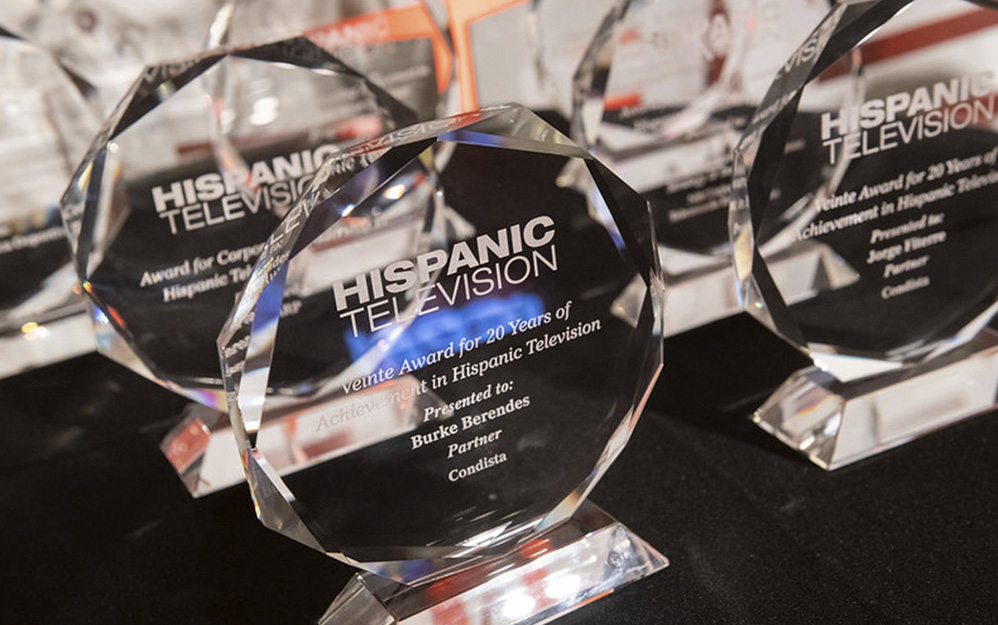
Hispanic Television Summit Awards (courtesy of Future U.S.)

Etiquetas

Contactos

Empresas


Diario de Hoy






Noticias relacionadas (9)

12 de septiembre de 2025
Hispanic Television Summit: Regresa el 20 de octubre más condensado pero con igual relevancia

11 de septiembre de 2024
Hispanic Television Summit culminates a 22-year era and starts a new chapter in 2025


12 de noviembre de 2021

11 de julio de 2019
Hispanic Television Summit returns to NYC Television Week as a featured track
