U.S. HISPANIC Versión en español
Juan Delgado of Day Pitney: “The Challenge Is Balancing Technological Innovation with the Protection of Creative Workers”
Maribel Ramos-Weiner | 10 de julio de 2026
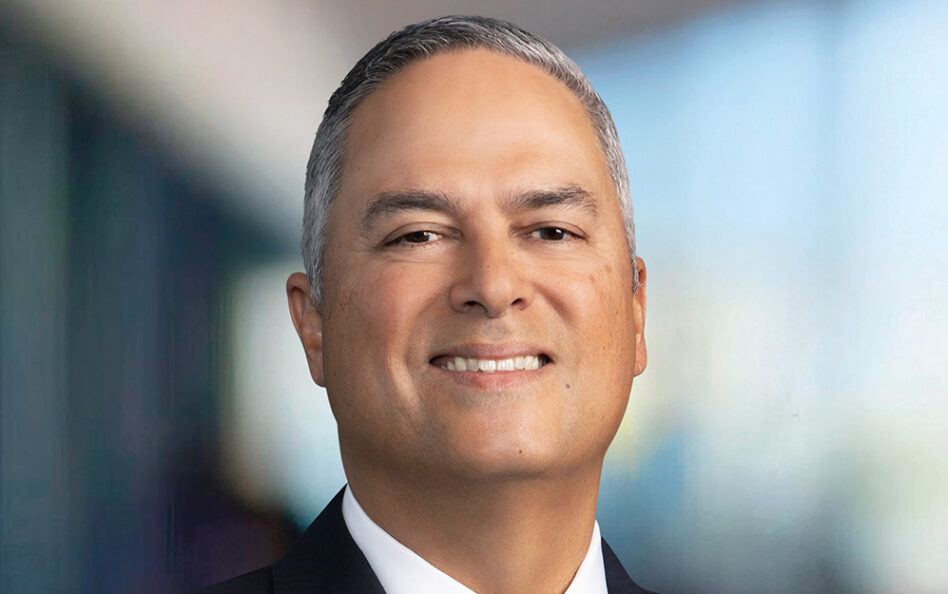
According to Juan Delgado, Co-Chair of the Sports, Media and Entertainment practice at Day Pitney in Miami, artificial intelligence (AI) is now at the center of everything happening in Hollywood, “for writers, for actors, and now also for directors.”
Providing context on what is happening with AI in relation to Hollywood unions—a topic that has been widely discussed—he noted that “especially after the 2023 negotiations, which were lengthy and contentious and, as you know, had a significant impact on the entertainment industry, particularly in California.”
Delgado said the challenge is finding a balance between technological innovation and the protection of creative workers.
“That balance was precisely one of the central issues in the latest round of negotiations, beginning with the Writers Guild agreement, which was concluded relatively quickly. The contract moved from the traditional three-year term to a four-year term. Industry reports indicate that both sides were willing to make certain concessions, mainly because no one wanted to go through another prolonged strike that would continue affecting the business. Many people believe the strikes had significant consequences for the industry. There is a genuine effort to find a way for studios and creatives to work together without the industry suffering major disruptions again. I think it has been a very smart decision by all parties to seek a solution that benefits everyone,” he said.
STRONGER AI PROTECTIONS
He noted that AI has been a key issue because previous negotiations focused specifically on the use of AI, studios’ ability to train AI models, and related matters.
Delgado pointed out that what is interesting about the agreement reached by the Writers Guild is that it includes enhanced AI-related protections while also appearing to allow studios to train their own “captive” AI models—models that are not open to the public but are instead used internally by each studio.
“This flexibility is something that has been widely discussed within the industry. I have not independently verified it, but it is what I am hearing from various sources. It appears that the agreement provides more room for the use of AI in closed and controlled environments, though not in open environments,” he said.
He added that, in his view, SAG-AFTRA is the union with the greatest concerns regarding AI because it represents actors whose name, image, and likeness rights are directly implicated.
“AI models are trained on enormous amounts of information available on the internet, and we are seeing numerous lawsuits related to copyright infringement. The No Fakes Act is also advancing, seeking to protect people’s names, images, and likenesses in a way comparable to how the Digital Millennium Copyright Act helped protect music when digital file sharing began. Therefore, there are very significant legal developments taking place regarding rights protection. Actors have also negotiated stronger protections for their names, images, and likenesses within the new agreement they are seeking to ratify,” Delgado said.
HOW TO ACHIEVE PROGRESS
Delgado believes Netflix’s acquisition of InterPositive, the AI-driven film production startup founded by Ben Affleck, was an interesting strategy.
“I think it is an interesting way to bring different stakeholders together and explore how to move forward in a manner that makes sense for everyone. If we think about it, what is happening with artificial intelligence has certain parallels with what happened during the rise of digital music sharing. There are important differences, however, because AI does not merely distribute content—it can generate entirely new content. When music transitioned from analog to digital formats, the change was primarily about the distribution medium. With AI, the issue is more complex because it involves new creations. The question is whether those new creations are based on materials that belong to third parties. And if they are, whether those rights holders are entitled to royalties, licensing fees, or some form of compensation,” he explained.
He noted that numerous lawsuits have already been filed concerning the unauthorized use of content and copyright infringement.
“And I believe the No Fakes Act will help establish a legal framework for addressing these issues,” he said.
DEVELOPING A STANDARD
Delgado mentioned that, while listening to Matt Belloni’s The Town podcast, he learned that RSL Media is attempting to create a nonprofit organization, led by actress Cate Blanchett and supported by other Hollywood actors and actresses, with the goal of developing a standard that would allow creative professionals to register their preferences regarding the use of their name, image, and likeness through a traffic-light system: green, yellow, and red.
The idea, he explained, is that when AI systems search for information, they can consult this registry and verify the type of authorization that exists.
For example:
-Green light: The individual allows the use of their name, image, and likeness.
-Yellow light: The individual allows such use but requires financial compensation.
-Red light: The individual does not authorize any use.
“It is a very interesting development and appears to be gaining momentum within the industry. According to the podcast discussion, the official launch of this standard is scheduled for June 24. And I find it particularly interesting because, if this initiative gains acceptance, we could be witnessing the birth of a protocol or standard that clearly determines whether a person authorizes the use of their name, image, and likeness. AI systems could consult that registry and verify whether explicit authorization exists,” he concluded.
STILL MUCH TO RESOLVE
Delgado said there are still many issues that remain unresolved.
“I believe we will continue to see numerous copyright-related lawsuits, and once the No Fakes Act is passed, there will be specific legal protection for name, image, and likeness rights. Right now, an entire legal and technological infrastructure is being built to ensure that people’s rights are protected. The unions are extremely sensitive to these issues. And Ben Affleck’s involvement in this space is simply another indication that the creative community, studios, and the broader entertainment ecosystem are trying to find a way to make this technology work responsibly,” he said.
Asked about the Hispanic market, Delgado said it generally adopts new practices somewhat more slowly than the broader U.S. market.
“There is an old saying that when the U.S. catches a cold, Latin America gets the flu. It is not exactly comparable, but it illustrates how one market tends to be affected by the other. I think we will see a gradual adoption of these practices. There will be isolated cases of people who do not fully understand how to protect their name, image, and likeness rights. We will see litigation, although probably not at the same intensity as in the United States. Generally, what happens is that once the U.S. market establishes standards, protocols, and best practices, Latin America adopts them six to twelve months later. That is why I believe we will see the same debates in the Hispanic and Latin American markets, simply with some delay.”
Delgado agrees that there will be very significant growth in AI-created content within the Hispanic market.
“However, where I see the greatest risks is in the area of rights: usage rights, authorizations, and licensing will be critical. Companies must ensure they have the appropriate rights when using third-party content. Someone owns the copyrights to those materials. Therefore, I believe production companies should pay very close attention to these issues. And when they do not have clear answers, we can help them analyze these matters. They are complex issues that are becoming even more complicated with artificial intelligence, which is why we constantly monitor these developments.”
Delgado also referenced how the Tribeca Festival accepted a film that was created or assisted by artificial intelligence to compete in the festival.
“We are talking about top-tier festivals, streaming platforms, and major companies that are already accepting AI-produced content. That is why I believe we will see much more of this in the future. However, the greatest risks arise when a company uses an AI tool to generate content without properly verifying the origin of the materials used to create it. Companies must carefully review the information on which generated content is based; otherwise, they may expose themselves to significant legal problems,” he emphasized.


Diario de Hoy
|
viernes, 16 de octubre de 2026 |