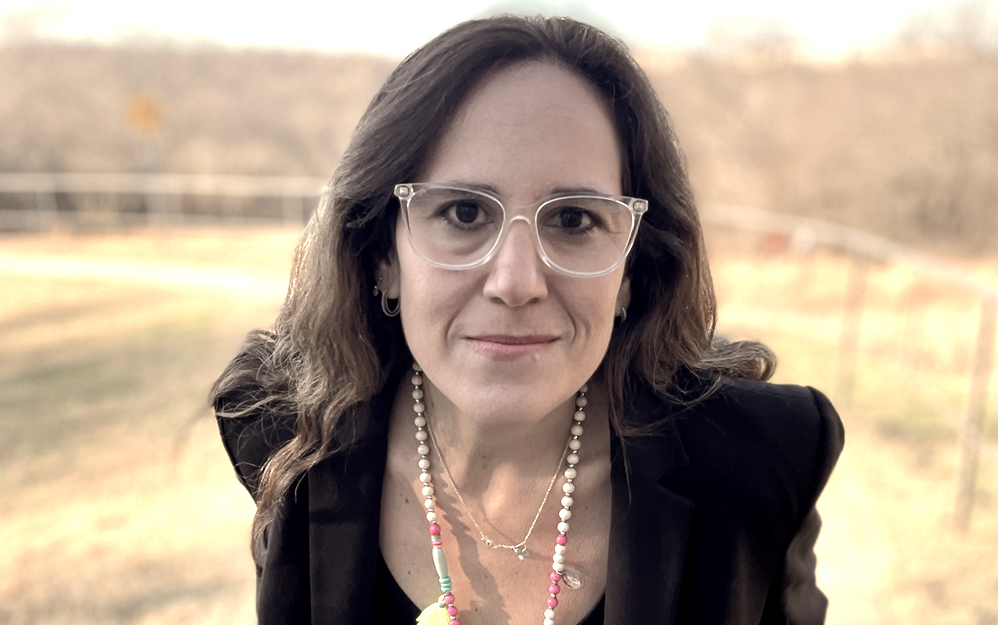
Aldo Quevedo and Flor Leibaschoffr of BeautifulBeast
The demographic transformation of the United States is no longer a projection for the future. It is already a reality—one that, however, is still not proportionally reflected in the investment decisions of many brands.
For Aldo Quevedo, CEO & Creative Chairman, and Flor Leibaschoff, Co-Founder & Chief Creative Officer of BeautifulBeast, the issue is not a lack of information about the growth and economic importance of Latino audiences. It is the failure of many companies to turn that reality into concrete business and marketing decisions.
“The United States has already changed,” they argue. And for executives who have spent more than two decades working in the industry, it is frustrating to see the conversation around the value of Latino audiences repeatedly return to square one.
“We’ve been saying this for 20 years—and even so, they still want to cover the sun with their hands,” they say. Eventually, they argue, ignoring the transformation will no longer be possible.
A gap between economic power and advertising investment
One of BeautifulBeast’s central arguments is the disconnect between the economic weight of the Latino population and the share of advertising investment allocated to the audience.
According to data cited by Quevedo and Leibaschoff, the Latino GDP in the United States would rank as the fifth-largest economy in the world and is growing twice as fast as the rest of the country. Yet brands dedicate only 4% of their advertising investment to Latino consumers. For BeautifulBeast, this is more than a missed business opportunity.
“It’s not a strategic gap. It’s an attention gap,” they argue.
The explanation, according to the executives, can often be found within corporate structures themselves: the absence of people with a deep understanding of Latino culture at the tables where key decisions are made.
“It almost always comes down to the same reason: there’s no one at the decision-making table who truly understands the culture and pushes their peers to see it,” they say.
As a result, while companies may acknowledge the growth of the Hispanic market in presentations, studies and consumer data, that recognition does not necessarily translate into budgets, communication strategies or meaningful representation within organizations.
Brands are also relationships
For BeautifulBeast, marketing to Latino audiences should not be reduced to market size and purchasing power. There is also an emotional dimension that becomes particularly relevant during periods of uncertainty.
“This isn’t just business. It’s emotional timing,” they argue.
Their analogy is simple: brands are like friends. And, as in any relationship, disappearing when things become difficult can have lasting consequences.
“Brands are like friends—the ones who disappear when things get difficult are unforgivable,” they say. According to data cited by the executives, 60% of Hispanic consumers abandon brands that contradict their values, the highest percentage among demographic groups in the country.
For BeautifulBeast, however, that behavior also represents an opportunity. Brands that remain present and consistent during difficult moments can build relationships that go beyond price or promotional offers.
Companies that stand alongside Latino consumers during the difficult moment the community is currently experiencing in the United States, they argue, can build a level of loyalty strong enough to withstand even price increases.
The next generation is already here
The urgency of the conversation is also tied to the age of the Latino population.
One in four members of Gen Z and Gen Alpha in the United States is Hispanic, according to data cited by BeautifulBeast. These are not consumers who are simply arriving in the U.S.; they are young people who were born and raised there.
That distinction matters because it changes how brands should understand the market. This is not simply an audience that consumes American products and needs to be addressed through culturally adapted messaging. It is a generation that is already an integral part of the country’s culture—and of its economic future.
“In ten years, they’ll be making household purchasing decisions,” Quevedo and Leibaschoff point out. And those generations, they warn, will remember which brands showed up and which ones did not.
For BeautifulBeast, therefore, the Latino market should not be viewed solely through the lens of the immediate return on a campaign. It is also about deciding what kind of relationship companies want to build with consumers who will have an increasingly powerful influence on the U.S. marketplace.
The risk of standing still
The paradox, according to the agency, is that while some brands continue debating whether Latino audiences deserve greater investment, others are already building relationships with them.
“While the rest of the market is still debating whether this audience is worth investing in, we’re watching from the front row as brands that refuse to evolve move closer to becoming the next Blockbuster,” they conclude.
The reference to Blockbuster serves as a warning: the greatest risk for a company is not necessarily misreading a trend, but refusing to recognize that the market has already changed.
For BeautifulBeast, the growth and influence of Latino audiences in the United States stopped being an emerging trend a long time ago. The challenge now is ensuring that corporate structures, advertising budgets and decision-making spaces reflect that transformation.
After 25 years of having the same conversation, Quevedo and Leibaschoff argue that the time to debate whether the Latino market matters has passed. The question now is which brands are willing to prove that it does.
|
martes, 11 de agosto de 2026 |
Flor Leibaschoff of BeautifulBeast: “The Latino Voice Is No Longer Background Noise”