U.S. HISPANIC Versión en español
Roku Media: “The Digital Native Media Sector Will Continue to Grow Over the Next Five Years”
Maribel Ramos-Weiner | 9 de febrero de 2025
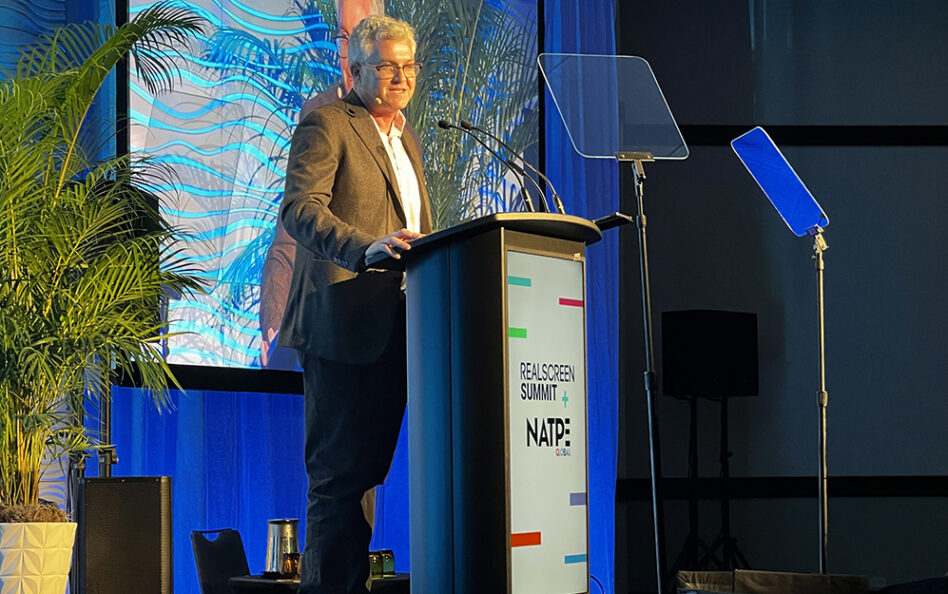
Eilenberg acknowledged that YouTube is the dominant streaming service on TV: “Larger than Netflix and any other streaming service, accounting for 11.1% of total TV viewership as of December 2024"
David Eilenberg, Head of Content at Roku Media, who has been with the company for three years, shared several insights with Natpe attendees during his keynote presentation. One key takeaway was that despite the challenges of recent years, the video production sector that has remained unaffected—and is expected to grow over the next five years—is digital native media.
“Being part of this company for three years has been an eye-opening experience. Roku is not just a tech company; it’s a tech company behind the No. 1 streaming platform in the U.S. I have some insights to share: the transition from linear to streaming will continue, with streaming setting new viewership records over traditional TV in the coming months. According to the latest Nielsen Gauge report, streaming accounts for a record 43.3% of total TV viewership, and we anticipate that number will keep growing,” Eilenberg told the audience.
Another insight he shared is that advertising is making a strong comeback. “Five years ago, we lived in a world where most major streaming services had shut out advertisers. But now, except Apple, all major streaming services either have an ad-supported tier or, like The Roku Channel, are completely free and ad-supported,” he noted.
A third observation was that the massive growth in FAST channel consumption proves that audiences enjoy having 24/7 linear channels they can tune into.
“In February 2020, we might have thought that the future would be entirely on-demand, but—just like the supposed ‘death of advertising’—that turned out to be false. While many viewers prefer on-demand experiences, many others opt for something that feels more like traditional TV,” he emphasized.
Eilenberg pointed out that these insights are great news for those with a catalog of finished content or those distributing live-streaming channels. “At least for now, they will find platforms eager to partner with them across the connected TV landscape, especially if they bet on themselves and embrace a revenue-sharing model,” he said.
DIGITAL NATIVE MEDIA
While he couldn’t predict when content acquisitions would increase, he stressed that one production area has remained resilient amid industry challenges—and he is confident it will grow over the next five years. “That area is what we consider digital native media, which is already merging with TV in ways that I don’t think have been fully appreciated yet, but which I witness daily as part of this platform.”
He acknowledged that YouTube is the dominant streaming service on TV—“larger than Netflix and any other streaming service, accounting for 11.1% of total TV viewership as of December 2024. And that’s just on TV. If you include consumption on other devices and digital platforms like TikTok, Instagram, and Snapchat, the depth of this revolution becomes even clearer. It’s more than just a behavioral shift—it’s a cultural revolution. Anyone interested in the future of video production must spend time understanding the digital native world and engaging with the creators who are shaping it.”


Diario de Hoy
|
viernes, 18 de septiembre de 2026 |
Noticias relacionadas (5)


