
U.S. HISPANIC Versión en español
Juan Delgado of Day Pitney: “A Reliable, Long-Term State Incentive Program Would Allow Florida to Regain Competitiveness”
Maribel Ramos-Weiner | 13 de marzo de 2026
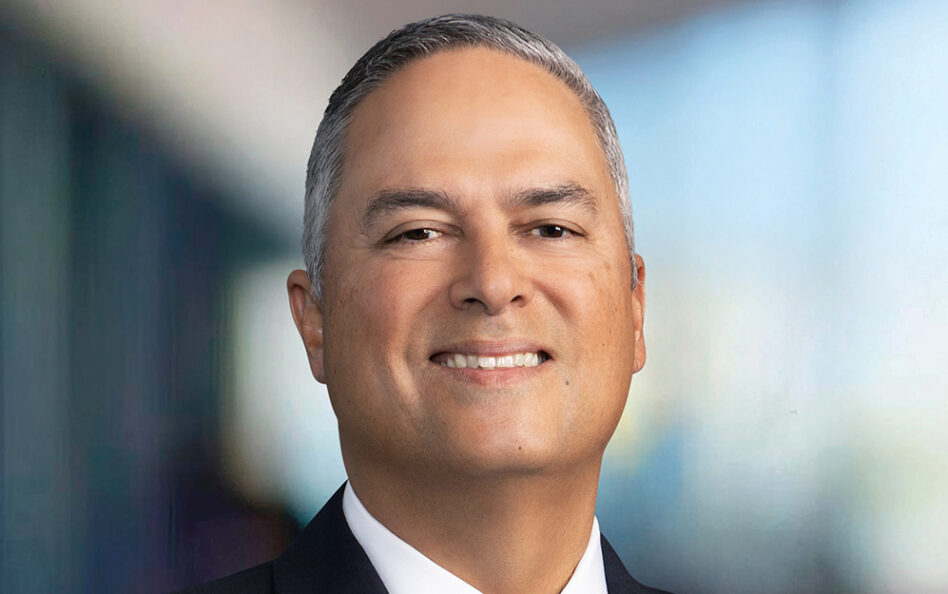
Juan Delgado, co-leader of the Sports, Media and Entertainment practice at Day Pitney (Miami, Florida)
For Juan Delgado, co-leader of the Sports, Media and Entertainment practice at Day Pitney (Miami, Florida), the primary objective today should be to reactivate a state-level production incentive in Florida, beyond individual city or county initiatives.
“A state-level program — reliable, long-term, and structured to provide certainty — would be the foundation that truly allows the state to regain competitiveness against markets such as Georgia, New Mexico and others. Those states have succeeded because their incentive programs are consistent and enduring. For Florida to reclaim its position as a premier production destination, the focus must ultimately shift toward reestablishing a statewide framework that studios can rely on year after year,” Delgado told PRODU.
THE EXAMPLE OF ORANGE COUNTY IN ORLANDO
Citing the case of Orange County in Orlando, which recently launched a US$25 million incentive program, Delgado noted that the county and the Orlando region overall “have long been deeply connected to film and TV production. The area is home to institutions such as Full Sail University and the production facilities of Universal Parks & Resorts, as well as several established production companies. Historically, Orlando market leaders have been at the forefront of state-level discussions about reinstating Florida’s tax incentives. During my time at NBCUniversal Telemundo, for example, we regularly collaborated with Universal Parks & Resorts to advance these discussions in the Legislature.”
For that reason, Delgado said he is not surprised to see Orange County take a leadership role and seize this moment to reignite a broader dialogue on production incentives in Florida.
Delgado believes Orange County’s action may encourage others to take a closer look at what they can do. “Pressure may not be the right word, but I do hope it motivates other counties to evaluate how they can contribute to a more competitive environment. The Orlando region has historically played a leadership role in advocating for film and TV incentives in Florida, especially during past legislative efforts, so this initiative is very much aligned with that legacy. I would expect this move to reactivate broader discussions about how county-level efforts can be incorporated into a more comprehensive state strategy,” he said.
Delgado also mentioned, without naming specific individuals, that influential figures in the media and entertainment industry — many of whom have operated in Florida for years or have recently relocated to the state — are actively participating in conversations about why Florida lacks a sustainable and reliable incentive program.
“These conversations are ongoing. As they evolve throughout the year, our firm expects to be well positioned to help lead efforts on behalf of stakeholders committed to reactivating a meaningful state incentive,” he stated.
THE ORANGE COUNTY MODEL
Asked whether Orange County’s incentive program could serve as a model to push for reinstating a statewide incentive program in Florida, Delgado responded, “absolutely.”
He noted that the key to any incentive program is demonstrating its economic impact. “When we conducted impact analyses during previous legislative efforts, we found that every dollar invested through an incentive could generate between US$9 and US$100 in economic return, depending on the model used. If Orange County can demonstrate that its US$25 million investment generates measurable benefits — including job creation, increased activity for local vendors, and growth in related industries such as catering, wardrobe, lighting, sound, and other production services — that data can be very powerful in making the case for reinstating a state program.”
He added that incentives benefit not only production companies; “they elevate the entire economic ecosystem that supports production. Demonstrating that reality with hard data is what can move the needle at the state level.”
FLORIDA NEEDS A STABLE AND RELIABLE PROGRAM
Delgado pointed out that states such as Georgia and Louisiana have built reliable, long-term infrastructure around their incentives. “Production companies know those programs will be available every year, and that certainty drives long-term investments, both in physical infrastructure and talent development. Florida faces additional challenges as a balanced-budget state, which means the structure of any incentive must be carefully designed. To compete, Florida needs legislative champions who establish a stable, reliable program protected from year-to-year uncertainty. If the state achieves that, Florida could once again attract the talent and production volume it had in the past,” he said.
IMPACT ON LATAM
Asked about the impact that an incentive program — in Florida or other states — would have in attracting productions from Latin America, Delgado noted that Latin American markets present a particular challenge for U.S. incentive programs, including Georgia’s.
“Production costs — especially labor — are significantly lower in countries such as Colombia, the Dominican Republic and others that today offer very robust incentive structures. Spain and Puerto Rico have also become strong competitors. To attract more Latin American productions, Florida would need a long-term incentive that takes these economic realities into account and sends a signal of stability to producers evaluating global options,” he concluded.
He emphasized that Florida does have clear natural advantages: a wide diversity of landscapes, favorable year-round weather, and the ability to replicate many types of environments within short travel distances. “South and Central Florida, in particular, offer beaches, urban settings, forests, lakes and more. These assets make the state internationally competitive if combined with a sustainable incentive strategy. But without a reliable program, it will be difficult for Florida to compete with lower-cost, incentive-rich markets throughout Latin America,” he concluded.


Diario de Hoy
|
viernes, 16 de octubre de 2026 |
Noticias relacionadas (4)


4 de octubre de 2024

