U.S. HISPANIC
Ana Castañeda of Casanova//McCann: “Technology Should Serve Strategy, Not the Other Way Around”
1 de abril de 2026
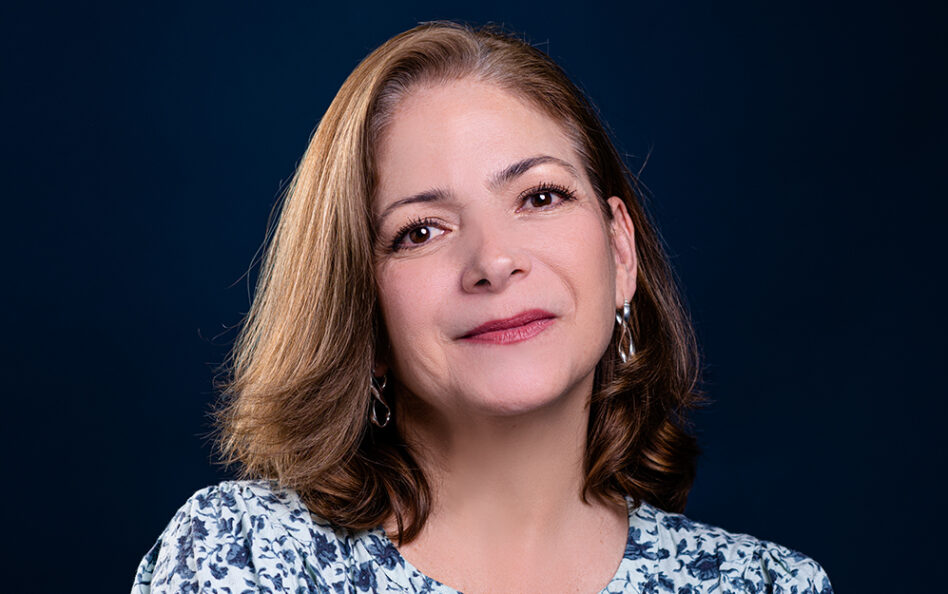
Ana Castañeda, Group Account Director at Casanova//McCann
At a time when algorithms, automation, and artificial intelligence are redefining the advertising industry, leadership faces a crucial question: what remains deeply human in an environment increasingly governed by data? For Ana Castañeda, Group Account Director at Casanova//McCann, the answer is clear: technology amplifies, but does not replace judgment.
“Algorithms can process data at a speed no human can match. But data does not feel, it does not interpret cultural context, nor does it anticipate emotional shifts in society,” she says. From her perspective, technology is not a substitute, but a tool. Predictive models indicate what is happening and what might happen; experience helps explain why; and intuition—backed by years of consumer insight—makes it possible to anticipate what has yet to appear on dashboards.
In the Hispanic market, where culture, language, and migratory experiences deeply shape consumer decisions, Castañeda emphasizes that human power lies in reading nuance. “An algorithm can detect behavior, but it cannot understand the cultural pride behind a song or the emotion triggered by an image that connects with collective memory.” Data provides objectivity; cultural relevance remains deeply human.
AUTOMATING PROCESSES, NOT MEANING
Within agencies, automation is advancing rapidly. Segmentation, programmatic buying, dynamic testing, and performance analysis are, for Castañeda, natural territories for technology. “Everything that is repetitive and optimizable should be automated,” she argues.
The line is drawn when it comes to defining the problem, crafting the creative narrative, and shaping strategic positioning. These decisions require vision, cultural sensitivity, and accountability for the impact they generate. “Technology should serve strategy, not the other way around.”
That responsibility, she adds, should not rest on a single individual, but on diverse teams led by people with strategic expertise and cultural understanding. Accountability is shared.
WOMEN LEADERS AND THE POWER TO DEFINE VARIABLES
Beyond adopting tools, Castañeda believes the real challenge for women in leadership lies in actively participating in defining the criteria that technology optimizes. “The real power is not in the algorithm, but in the variables we choose to prioritize as an industry.”
If optimization focuses solely on efficiency or short-term savings, she warns, the risk is impoverishing storytelling and reducing cultural value to what statistically “works.” At a time when artificial intelligence is transforming marketing, these decisions also impact society and the planet.
“The integration of AI must be managed with a responsible and sustainable vision. It’s not just about how fast or efficient we can be, but how we use technology consciously, taking into account its cultural, ethical, and environmental impact.”
From her perspective, many women in leadership bring a more holistic, long-term outlook—one that balances results with consequences. This vision is key to expanding success metrics, establishing clear principles for the responsible use of artificial intelligence, and ensuring that innovation strengthens—not weakens—cultural and creative diversity.
REDESIGNING THE SYSTEM FROM WITHIN
Castañeda insists that technology is not neutral. Every mathematical model reflects human decisions: what data is included, which variables are prioritized, and what behaviors are considered the norm.
Women currently in positions of power, she argues, have the responsibility to question, redesign, and challenge these systems. This involves fostering diversity within the teams that develop technology, promoting transparency in models, and integrating ethical and cultural criteria into automation.
“Female leadership today is not defined by how quickly it adopts innovation, but by the clarity with which it helps guide it.” If previous generations succeeded in opening doors in boardrooms, the challenge now is to keep them open in the design of the systems that will shape the future of the industry.
For Ana Castañeda, the future of marketing cannot be measured solely in efficiency. It must also be measured in responsibility, awareness, and humanity.


Diario de Hoy
|
lunes, 6 de abril de 2026 |