U.S. HISPANIC
Sergio Mendoza of Telemundo: “Original Spanish-Language IP: The New Currency of Global Co-Production”
11 de septiembre de 2026

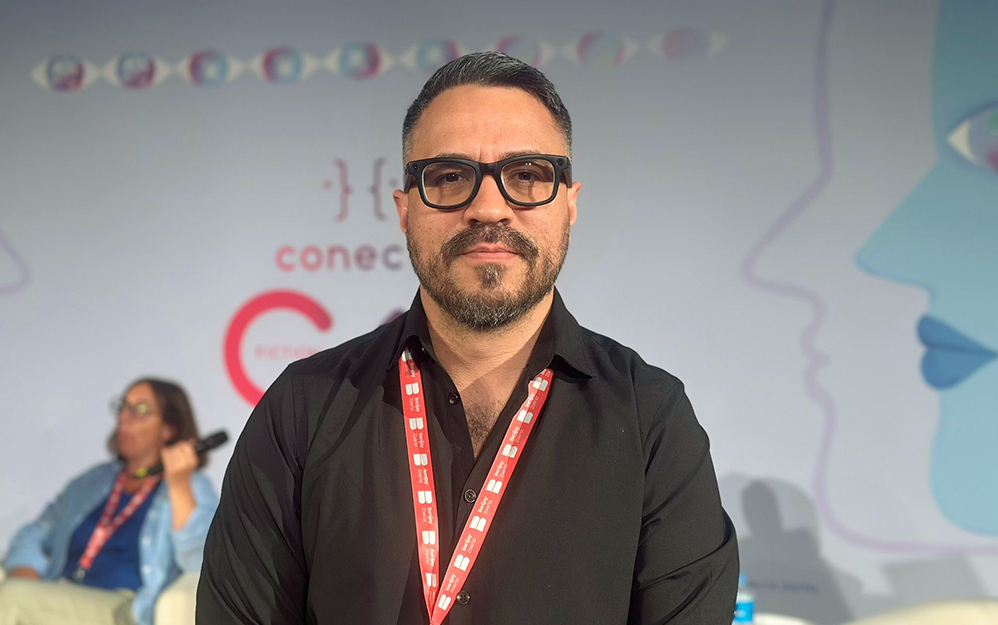
Sergio Mendoza, VP, Scripted Development at Telemundo
Not long ago, when a Spanish-language studio sat down to negotiate with a global streamer, the conversation began with the catalog: how many hours, at what price, under what release windows, and across how many territories. Today, the first question is different: What sets this project apart, and why does it need two partners to realize its full potential?
Spanish-language content now occupies a strategic position. According to Omdia’s analysis of Netflix’s engagement report, it generated approximately 6.69 billion viewing hours on the platform in the first half of 2024, making it one of the most-watched categories of non-English-language content, second only to Korean content during that period. The market is no longer debating whether our stories can travel. The question now is who will control that journey and share in the value it creates.
While the current strategy can be summed up as “local for local”—winning over audiences in the territory of origin first—the financial landscape is making partnerships increasingly important. Co-production brings together resources, capabilities, and access to markets. But it should not simply mean splitting costs; it should also mean sharing risks, opportunities, and intellectual property.
In this context, original Spanish-language IP has become a key differentiator at the negotiating table. Its economic value is also becoming measurable. Productions originating in Mexico reportedly generated nearly US$409 million for the leading platforms in 2024, up from US$206 million in 2021. In other words, their contribution nearly doubled in three years.
These figures allow us to reframe the conversation. Spanish-language content should no longer be presented solely as a form of cultural expression or a demographic opportunity, but as an asset capable of generating demand and revenue beyond its home market.
This is especially relevant when we look at properties that originated on linear television and are now moving to streaming platforms. An IP with brand recognition, an established fandom, and a proven track record offers something a new project has yet to build: emotional memory and an existing relationship with the audience. That alone does not guarantee digital success, but it does reduce some of the commercial uncertainty and provides a foundation for developing new seasons, characters, and narrative extensions.
El Señor de los Cielos demonstrated that an original Spanish-language property can sustain ten seasons, build an expanded universe, and create characters audiences know and recognize. This is no longer just a title—it is an asset.
The other challenge is learning how to co-produce without forcing it. Co-production is not limited to partnerships among a studio, a network, and a platform. Cross-border collaboration is also growing. In Spain, approximately 27% of new series are international co-productions, compared with a global average of roughly 7.5%.
But this kind of collaboration requires creative care. In the past, we tried to internationalize certain productions artificially, adding a Mexican character to a Colombian series, for example, or a Spanish character to a Mexican production. In many cases, it did not work because nationality felt like an add-on rather than an organic part of the story.
The strongest approach begins in the writers’ room. In a world shaped by migration, transnational families, and hybrid identities, there are conflicts that emerge naturally from the intersection of cultures. We do not need to force different nationalities into a story when those nationalities are already integral to the conflict we are exploring.
The value each partner brings is also determined at the creative source. A partner who brings only capital negotiates schedules, territories, and premiere dates. A partner who contributes original IP—and has a proven ability to bring it to life—can negotiate rights, sequels, spin-offs, adaptations, and season renewals.
Another major challenge is producing for an audience that is becoming increasingly demanding and fragmented. A U.S. Latino viewer might move, in a single evening, from a streaming drama to the nine o’clock telenovela, and from there to YouTube or vertical video. That viewer navigates multiple languages, formats, and cultural references and cannot be reduced to a single identity.
When we talk in the writers’ room about creating “stories that travel,” we know the key lies in emotion. We often say that we all cry over the same things, but we laugh at different ones. That is why drama tends to cross borders more easily, while comedy faces more complex cultural barriers.
Simply having a story in Spanish is no longer enough. The advantage lies in owning a distinctive story, executing it with quality, and building a lasting relationship with the audience around it.
That is why we must resist the temptation to dilute our stories so they will “travel better”—neutralizing the accent, erasing the city, or removing local references. Every time we do that, we give away the one thing no one else can replicate.
What sparks interest abroad is not always a story that could have happened anywhere, but one that could only have happened here. Specificity does not prevent a story from being universal; it gives that story identity, truth, and a reason to exist.
The new currency of global co-production is not just capital or catalog volume. It is the ability to create distinctive IP that resonates locally, travels internationally, and retains its cultural identity.
Partnerships are necessary, but their true value emerges when each partner preserves and strengthens what makes it indispensable. For the Spanish-language industry, that value lies in our stories, in our ability to produce them, and, above all, in our determination not to erase what makes them ours.
By
Sergio Mendoza
VP, Scripted Development
Telemundo


Diario de Hoy
|
viernes, 11 de septiembre de 2026 |