
U.S. HISPANIC Versión en español
Director Beto Hinojosa: “Shooting Timbiriche in Montevideo Raised the Scale of its Production Design”
Maribel Ramos-Weiner | 6 de noviembre de 2026
Beto Hinojosa, director of the series Timbiriche, and Pablo Cruz, producer at El Estudio
For Beto Hinojosa, director of the series Timbiriche for ViX, when producer Pablo Cruz, CEO of El Estudio, presented him with the idea, the responsibility was to create a portrayal that would appeal to nostalgia, but that would also speak to the contexts and what a Mexico that no longer exists today was like, and on the other hand, knowing the fan base that the group has and what it represented in Mexican pop music, understanding the phenomenon through the eyes of a teenager of that era.
“Generating the same experience when it came to filming it, directing it, creating it and organizing the whole project in order to convey what I think happened when you were a kid and none of what exists today existed, neither the Internet nor anything else, but these kids were true stars and a very different kind of entertainment than today’s,” Hinojosa said in an interview with PRODU.

Timbiriche (8×45′)
Cruz of El Estudio, the project’s producer, said she grew up listening to Timbiriche at the most important moments of her life, “which I know is shared by Mexicans around my age, since it’s already a soundtrack of your life. Timbiriche is the first love, the first rejection, the first goodbye, it’s the first girlfriend, the friends, going out, my high school graduation. And that is a series in itself,” she says.
She adds that she was always fascinated with the band’s story, with how a group of kids from such a wildly varied background -children of poets, people from the Jewish community, children of Televisa executives- ended up on that musical journey “that I found extremely interesting to explore.”
“What was behind how they got along with each other? What goes through a parent’s mind when they say, go ahead, take my kids on tour? And who is responsible for them? Who looks after them, until it becomes an absolute success and what happens behind all of that. This is what has always fascinated me about Timbiriche’s story, how those kids become adults the moment they leave their homes and end up in a stadium with 10,000 people. That brings with it adventures that are no longer the soundtrack I was telling you about, that make them extraordinary, that turn them into our heroes, into people we admired growing up, the hairstyles, the clothes, the boots, and that, in the end, today is a tribute to Timbiriche and a celebration of its music,” Cruz said.
MONTEVIDEO WAS THE SHOOTING LOCATION
From the outset, Hinojosa clarifies that the series was shot in Montevideo, Uruguay and not in Mexico, where Timbiriche is from.
“That whole decision of how to make an ’80s Mexico outside of Mexico, rather than being a problem, ended up having many virtues, because in Montevideo there is still a lot of architecture from the ’70s and the early ’80s. We managed to give the production design enormous values by being able to use buildings, houses and period settings in present-day life. That helped a great deal in being able to design and aim for open spaces and exteriors that would convey the era. And on the other hand, with Victoria Cuevas, our production designer, and our directors of photography, Mark Belver and Bruno Gaeta, we designed how an ’80s series had to look, but with the quality that it wouldn’t feel dated today or like a documentary, but simply be a journey through time,” the director noted.
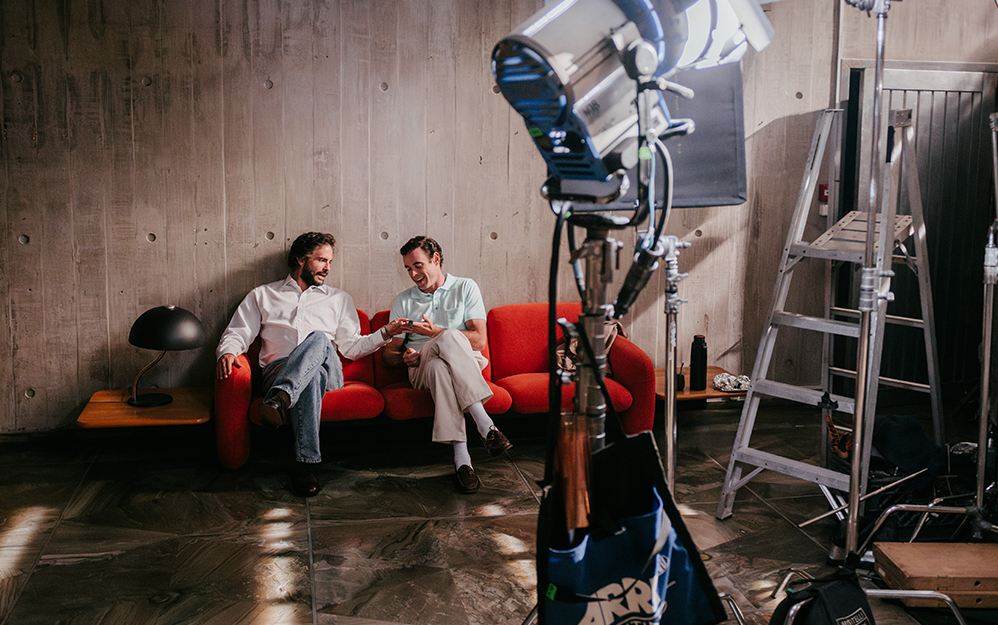
Osvaldo Benavides in a scene
He added that it was a “titanic” production, because these characters traveled across the country throughout the band’s entire era. “And not just their own country, but they went on international tours. Watching the series, and being someone from the ’80s, I feel that we really were able to travel through time,” he added.
KEEPING THE LIMITATIONS IN MIND AND WHAT TO CONVEY
Cruz said she has worked with Hinojosa and the team behind the series on other projects for several years now. She noted that the “muscle” of this working group is how to fit the episodes into the limited time and budget available.
“What’s essential are the feelings that guide us through the creation of the series. We create with the limitations in mind, but also with an eye on what’s important to convey in every word written in the script, what emotions need to travel between the characters. Separating from the real-life characters is extremely important because otherwise the fiction becomes very complicated. That’s why we drew 100% inspiration from what actually happened, but we turn it into fiction, and that’s where you find the drama from which we build the series,” Cruz noted.
ADJUSTING TO PRODUCING OUTSIDE OF MEXICO
Cruz noted that they are very comfortable with the way they shoot in Mexico and have grown accustomed to certain flaws the industry has. “We’re spoiled. I think the hardest part was going to Uruguay.”
She said producing outside of Mexico made them “afraid,” but during the first week of filming they began to “streamline everything and we realized how nice it was to also go back to basics, that maybe we don’t need as much, we can be more efficient and focus more on things that here, in Mexico, we take for granted, and we ended up filming a series that was an incredible experience for us,” Cruz concluded.
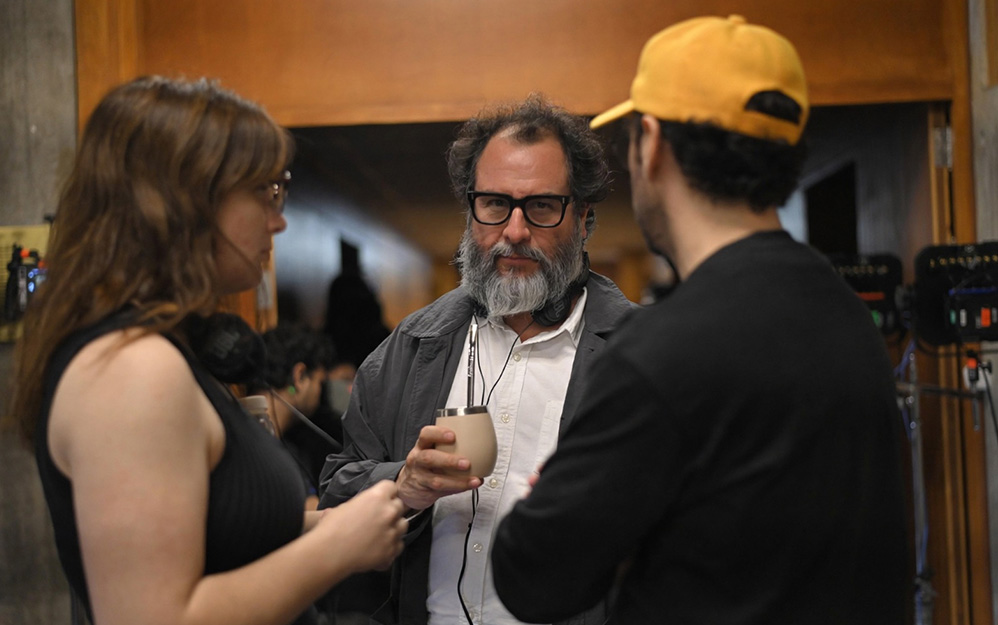
Pablo Cruz, producer and CEO of El Estudio, during filming





Diario de Hoy
|
viernes, 6 de noviembre de 2026 |
Noticias relacionadas (3)


25 de septiembre de 2026
ViX Presents The Trailer For The Series Timbiriche, Debuting Friday, October 9

21 de septiembre de 2026
ViX revela el primer vistazo y confirma al elenco de la serie original Timbiriche