U.S. HISPANIC
Marisabel Muñoz of MLS: “This Is the Strongest Soccer Ecosystem North America Has Ever Had”
5 de junio de 2026

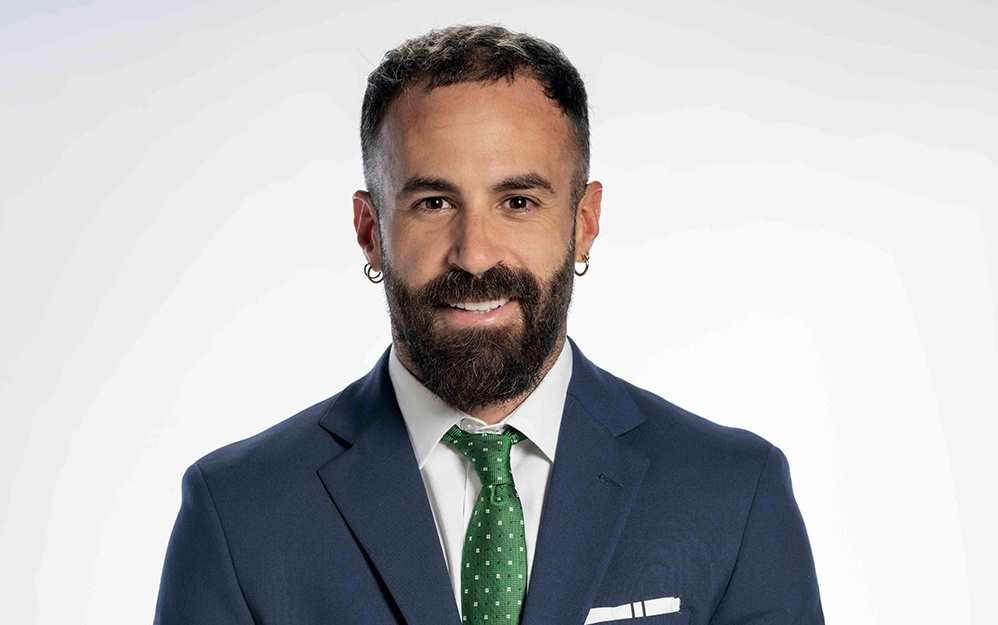
Marisabel Muñoz, Senior Vice President of Communications at Major League Soccer
When the FIFA World Cup arrived in the United States in 1994, soccer was still fighting for mainstream recognition in the country. There was no stable first-division professional league, few soccer-specific stadiums, limited infrastructure, and little certainty that the sport could sustain long-term commercial relevance in North America.
More than three decades later, the landscape looks radically different.
As the World Cup prepares to return to North America in 2026 — across the United States, Mexico, and Canada — it will arrive in a region with a far more mature soccer ecosystem: one shaped not only by global stars and rising fandom, but also by the long-term development of Major League Soccer.
For Marisabel Muñoz, Senior Vice President of Communications at Major League Soccer, the transformation reflects decades of intentional investment in infrastructure, player development, media distribution, and cultural connection.
“We delivered on the promise,” Muñoz says. “In 1996, when MLS started, there were no soccer-specific stadiums. Thirty years later, we have 30 clubs, and almost every team has its own stadium.”
That evolution represents more than growth in attendance or franchise value. According to Muñoz, MLS clubs have invested more than $11 billion into soccer infrastructure, including stadiums, training centers, academies, and player development facilities.
Many of those investments will become visible during the 2026 World Cup itself. Several MLS stadiums and training facilities will host national team base camps and tournament-related operations.
“Five of our stadiums and multiple training centers will be used during the World Cup,” she explains. “That shows how much the league has contributed to building the sport’s infrastructure in this country.”
Beyond the “retirement league” narrative
While global attention around MLS often centers on international stars like Lionel Messi, Muñoz argues that the league’s most important contribution has been building a long-term development system for North American soccer.
“There’s investment in big players, of course,” she says. “But what’s equally important is the investment in academies and player development.”
That system is now producing talent for both club and national teams across the region. Muñoz notes that more than 40 MLS players are expected to participate in the 2026 World Cup, representing around 15 different countries.
Canada, in particular, has become one of the clearest examples of MLS’s influence. According to Muñoz, 20 of the 26 players on Canada’s national team developed through MLS systems or academies.
“The growth of soccer in Canada has been incredible,” she says. “MLS has played a major role in that.”
The timing of the World Cup also coincides with what Muñoz describes as a cultural turning point for the sport in the United States — one accelerated by Messi’s arrival at Inter Miami in 2023.
“There’s definitely a before and after Messi,” she says. “He brought global awareness, but also casual sports fans and families that maybe weren’t following soccer before.”
Streaming, social media, and the new soccer audience
The transformation of soccer in North America has unfolded alongside a broader fragmentation of sports media itself.
Traditional television models no longer dominate fan engagement the way they did in 1994. Today’s audiences consume sports through streaming platforms, short-form content, creators, social media, and multilingual digital ecosystems.
That shift heavily influenced MLS’s landmark global streaming partnership with Apple.
“Some people thought moving to Apple would hurt the league,” Muñoz says. “But our audience is digital-first. They are comfortable in streaming environments.”
Under the partnership, MLS consolidated local, national, and international rights into a single global streaming platform through MLS Season Pass on Apple TV.
For Muñoz, the deal was not simply about distribution — it was about aligning with how younger audiences already consume sports.
“Our fans are young, digitally native, and global,” she explains. “We needed to meet them where they already are.”
The strategy also extends beyond streaming itself. MLS has expanded its multilingual digital presence across YouTube, social media, and creator partnerships, particularly targeting Hispanic and Latin American audiences.
From the beginning, Muñoz says, MLS avoided treating Spanish-language communication as simple translation.
“We don’t just translate,” she says. “We speak to fans organically and authentically in their language and culture.”
Latino audiences are central to soccer’s future in the U.S.
As the Latino population in the United States continues to grow, so does its influence on the future of soccer in the country.
For MLS, Hispanic audiences are not a secondary demographic — they are central to the league’s identity and expansion strategy.
The league currently has 25 Latino supporter groups and continues investing in Spanish-language content, creators, and community engagement across different markets.
“There are deep cultural ties between MLS clubs and Latin American communities,” Muñoz says. “Those connections happen naturally.”
She points to examples like Venezuelan players Joseph Martínez in Atlanta or David Martínez with LAFC, whose presence strengthens emotional links between MLS clubs and fans across Latin America.
The World Cup, she believes, could amplify those relationships even further.
“This tournament is going to expose millions of people to soccer in a completely different way,” she says. “Not just globally, but locally — inside communities across the United States, Canada, and Mexico.”
A defining moment for soccer in North America
For MLS, the 2026 World Cup represents far more than a sporting event.
It is the culmination of a 30-year effort to establish soccer as a permanent pillar of North American sports culture — and potentially the beginning of another acceleration phase for the sport.
Back in 1994, the World Cup introduced soccer to much of the American mainstream. In 2026, the challenge will be different: deepening engagement inside an ecosystem that already exists.
“The sport has come a very long way,” Muñoz says. “The World Cup in 1994 helped introduce soccer to the country. But now, we’ve spent decades building the soccer culture in North America.”
As the tournament approaches, MLS finds itself not simply participating in that transformation, but positioned at the center of it — helping shape how the next generation of fans experiences soccer across media, culture, technology, and identity.

Etiquetas

Contactos

Empresas


Diario de Hoy
|
viernes, 18 de septiembre de 2026 |