
U.S. HISPANIC Versión en español
VIP 2000 TV: “Many Broadcast TV Channels Are Waiting To See Digital Success On YouTube Before Acquiring Content”
12 de diciembre de 2025
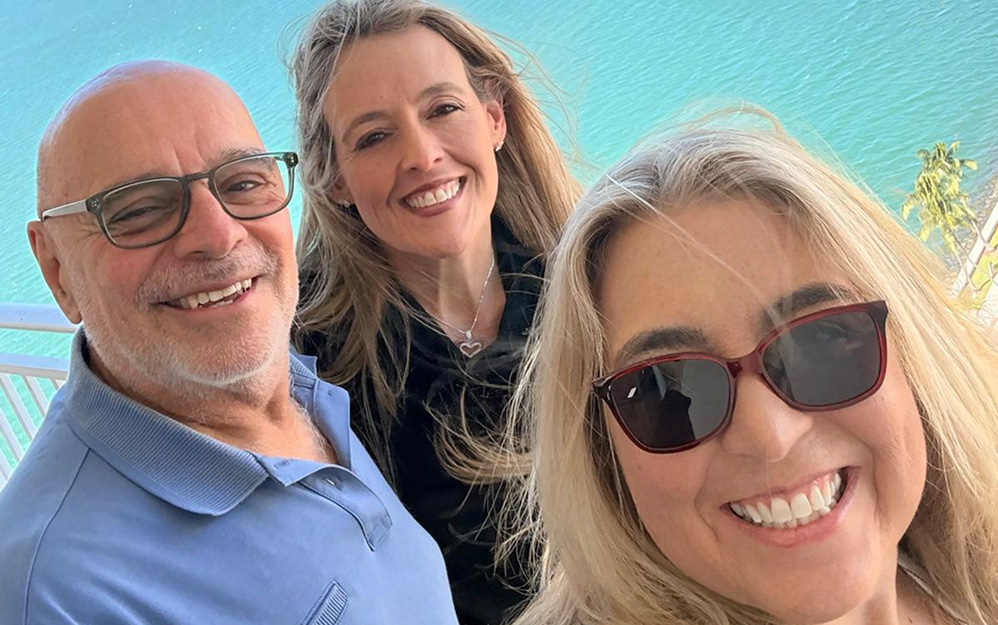
Roxana and Rosalind Rotundo, CEO and VP of VIP 2000 TV, respectively with PRODU´s Ríchard Izarra
Roxana and Rosalind Rotundo, CEO and VP of VIP 2000 TV, respectively, believe that more than being “the producers of the moment,” they are “fighters.” “When the business is in a tsunami—and we’ve all been in that tsunami—we come out of it, dry ourselves off, and push forward with what’s next,” said Roxana and Rosalind enthusiastically on #PRODUprimetime with Ríchard Izarra.
Roxana said she feels “super proud” of her sister Rosalind, a lawyer by profession, who joined VIP 2000 TV 20 years ago. “I feel super proud, especially of the way clients love her, appreciate her, trust her. In an independent company, the human side is the most important thing.”
FROM LAW TO CONTENT SALES
Before joining VIP 2000 TV in Miami, Rosalind worked for a legal auditing company and at the time was auditing a state-run enterprise. “It was terrible because it was during the Chávez era,” she says.
Rosalind explains that she already knew about her sister’s work because when she was still in Venezuela and Roxana began doing subtitling, she helped her; later, when Roxana started producing in Miami, she often attended the shoots. “I fell in love little by little, getting to know the clients, learning what to sell, learning about the markets. And I can say that in the last four years, what has fascinated me the most has been meeting clients outside Latin America—doing business with someone from Africa, Asia, Eastern Europe. It’s been a really beautiful and even multicultural experience, being able to travel to new festivals outside the Hispanic market to meet new clients. I think that has been the most enriching part, as well as our co-productions, which include two major telenovelas with companies outside Latin America. It has truly been a very enriching experience,” she says.
Rosalind added that with her legal background, she handles contracting, releases, and legalization. “I really like that too, that part of maintaining control and ensuring that every step is legally compliant.” While Rosalind handles the legal side, Roxana oversees the creative.
“I think that mix—me taking care of the legal and administrative side of the company and her handling the creative side—is what works. Roxana can invent a business where none exists. She goes into a meeting, the client says, ‘I have nothing,’ and Roxana creates a business. I admire that creative ability because not everyone has that talent,” Rosalind notes.
THE HUMAN TEAM
Roxana mentioned their Miami-based team, where María Eugenia Mucci leads the development of everything new they create; Ricardo Álamo heads cinematography; Nicolás Di Blasi is director; and “César Sierra, our head writer, who has worked nonstop with us at VIP for 20 years.”
“We have a team—mostly from Venezuela—handling marketing and our YouTube channel; we also have a team in Nicaragua and a lot of young people, kids fresh out of high school or in university, who are incredibly enriching because sometimes you want to correct them and they say, ‘No, that won’t work digitally.’ I always say that a company is shaped by each person. If someone doesn’t represent our values, they’ll never represent the company,” they said.
Rosalind gave the example of their YouTube channel, VIP+ TV, where a team responds to every single comment. “We launch an episode of Kuma, which generates 2,500 to 3,000 comments, and their job is to reply to everyone. People write things like, ‘Thank you VIP+ TV for listening to me, for considering me.’ They even share confessions—we’ve become almost like therapists. It’s something so beautiful, learning to listen to both the good and the bad. With *Kuma*, which is a very controversial telenovela due to its portrayal of abuse against women, there are two radical positions—even from those who criticize the show. But we’re on episode 97 and they haven’t missed one. That’s Kuma’s success. As I always say, our name is VIP because every client, every team member, every person who works with us is Very Important People,” she said.
ABILITY TO PIVOT QUICKLY
Rosalind emphasized the importance of maneuvering swiftly amid changes. “Large corporations—which, by the way, are getting bigger because of mergers—find it very difficult to react when the business stops performing and a radical change is needed. In recent years, the industry’s financial shifts hit everyone, and we started making internal changes. We had a huge office in Brickell, and there came a point—when Roxana was going through her cochlear implant process—when I was sitting there alone. And I said, ‘Let’s sell; this doesn’t make sense anymore.’ We began eliminating those high operational costs. Now we’re going to produce in Turkey, partnering with a production company we feel comfortable with, and we’ll continue operating country by country,” she explained.
LESSONS LEARNED
Asked about their takeaways from the latest Mipcom, Roxana mentioned the creator economy. “The presence of YouTube, Spotify, and all direct-to-consumer platforms surprised many in the industry who still think the way they did when Netflix first launched: that the internet wouldn’t allow Netflix to grow, that internet speeds weren’t strong enough. And that wasn’t the case. I believe in the democratization of content. In our case, we went to Turkey to create a vertical series and we went straight to YouTube. We’re not waiting for someone to buy it or say yes or no— we go directly to consumers and let the audience decide. That’s how we created Kuma in Turkey. We put it on YouTube and waited to see if audiences liked it. We hit 400 million views in Turkey alone,” Roxana said.
“That success is what led Canal 7 to acquire the telenovela,” Rosalind added.
They noted that just as they are learning, broadcast TV channels are learning too, and now they no longer prohibit placing content on YouTube. “That has completely changed. Many broadcast channels now wait to see digital success on YouTube. Because the metrics are so precise on YouTube—when they see a report, they say, ‘If it performed well, then I’ll buy it.’ They also now say that YouTube audiences aren’t the same as TV audiences, so it’s no longer competition the way it used to be. That’s something new we’re learning. And we saw it at Mipcom—90% of the talks were about YouTube.”
Asked whether monetizing Kuma on YouTube is as profitable as selling the tape years ago, they said it’s very different. “What we lived years ago—when all of Latin America was buying content: Argentina, Mexico, Brazil—I don’t think digital will ever replace that. To go digital, you must reduce your operation costs, as Rosalind explained. But it does allow you to not depend on a third party to monetize your content. It depends on whether audiences like it and watch it,” Rosalind explained.
She added that the days when you could sell a telenovela episode to a channel for US$5,000 “are long gone. The downturn affects everyone—broadcast channels whose ad revenue has fallen 40–60% because ads have moved to digital, and everyone else, including Turkish producers, who still have a fan base unlike any other country.”
They emphasized that as independent distributors, they can adapt to new budgets. “If you come from a big studio, adapting to those lower budgets is harder because of financial targets. That’s why being independent is an advantage right now: you can adapt to market changes.”
MAINTAINING THEIR OWN STYLE
Roxana added that VIP continues to define its own style and direction.
“We don’t want to create verticals or microdramas just like everyone else. We want to enter through that small space where we can distinguish ourselves and be the best—or the best we can be—within that genre. With the Bible stories—Moses and Zipporah, Samson and Delilah, Saint John the Baptist and Salome—we found a niche. Even channels that never imagined having vertical content were questioning it in Cannes: ‘I need to find a place to put this.’ It was incredible for us.”
Rosalind mentioned that her daughter gave them the idea to explore verticals when she paid around US$40 per month for a subscription to vertical-format content.
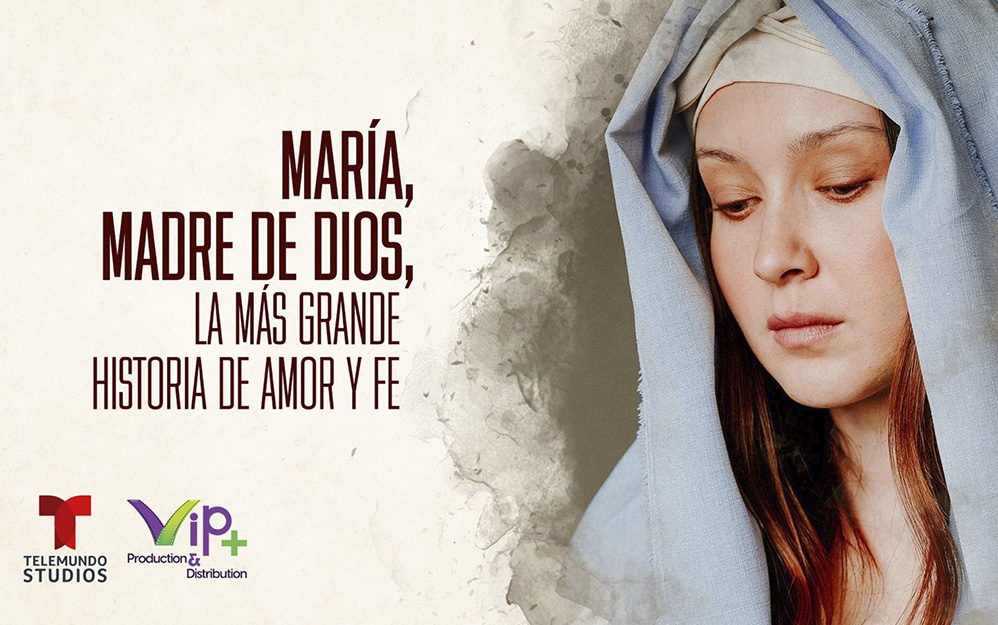
“When you start watching verticals, it’s such a different genre. It’s like a satire of dramatic telenovelas—it feels like going back in time, which is what young audiences are watching,” Rosalind said. She added that she suggested to Roxana producing love stories from the Bible. “Let’s create a period piece. Let’s tell the love story of Mary and Joseph. Imagine uniting all generations—the grandmother, the mother—telling the young person, ‘Come watch this vertical series about biblical love stories.’ One of the most impactful episodes is when Joseph sees Mary pregnant although they haven’t been together. Imagine that conversation for today’s youth.”
THE RETURN OF CLASSICS
The executive noted that when analyzing the most-watched verticals—some with 500 million views—they are “the classic, romantic telenovela.”
Roxana said they are currently remastering Venezuelan RCTV telenovelas in HD, such as Juana la Virgen and soon Mi Gorda Bella, “because we believe there will be a resurgence of classics. We’re preparing for that.”
VIP 2000 TV holds RCTV’s distribution rights. “We have an agreement with RCTV—we share distribution with SOMOS. Between both companies and our in-house team, we’re doing the HD 1080 remastering and adapting them to full screen. We created new credits, graphics, so they look brand new. I think the result is wonderful. Because even though classics may return, there’s also an expectation now that everything be in 4K. I believe remastered classics will catch on. We’ve already done this with Brazilian telenovelas like Xica da Silva, so I think this will come back.”
Rosalind said this is part of another business unit VIP has developed. “We have an internal lab that does all the remastering. We’ve worked on Jesus of Nazareth by Zeffirelli, the religious films about Pope John Paul II, Mother Teresa, Nero, Saint Peter, among others. This business unit lets us offer remastering services to clients for their telenovelas or classic content they want to exploit in HD on platforms,” she said.
They added that the lab is located in Alabama. “Our partner in this initiative is Venezuelan Johnny Pulido,” Roxana noted.


Diario de Hoy




Noticias relacionadas (9)
8 de diciembre de 2025
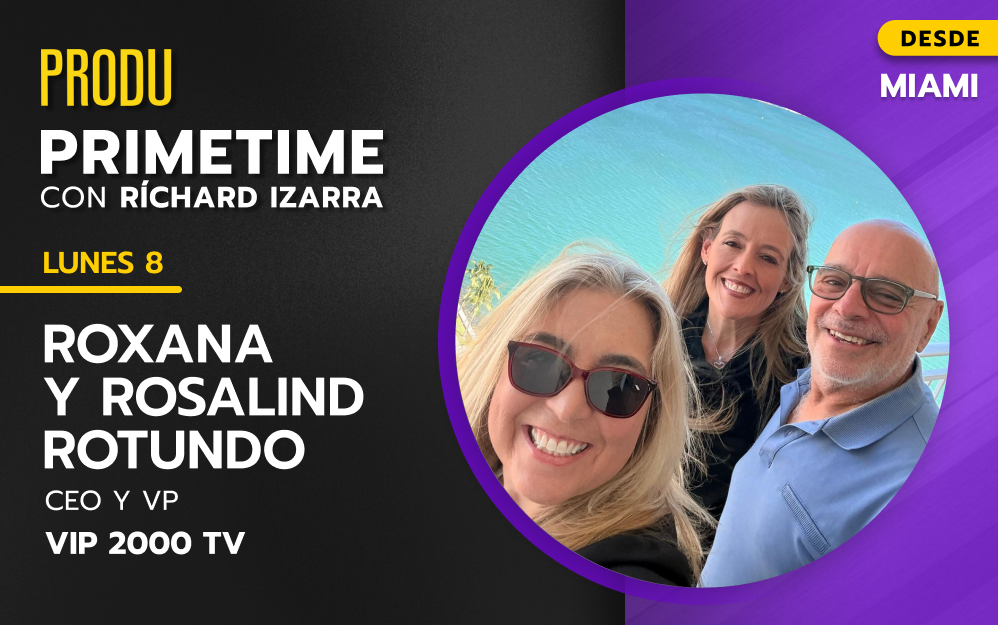
#PRODUprimetime con Ríchard Izarra desde Miami: Roxana y Rosalind Rotundo de VIP 2000 TV
16 de noviembre de 2025
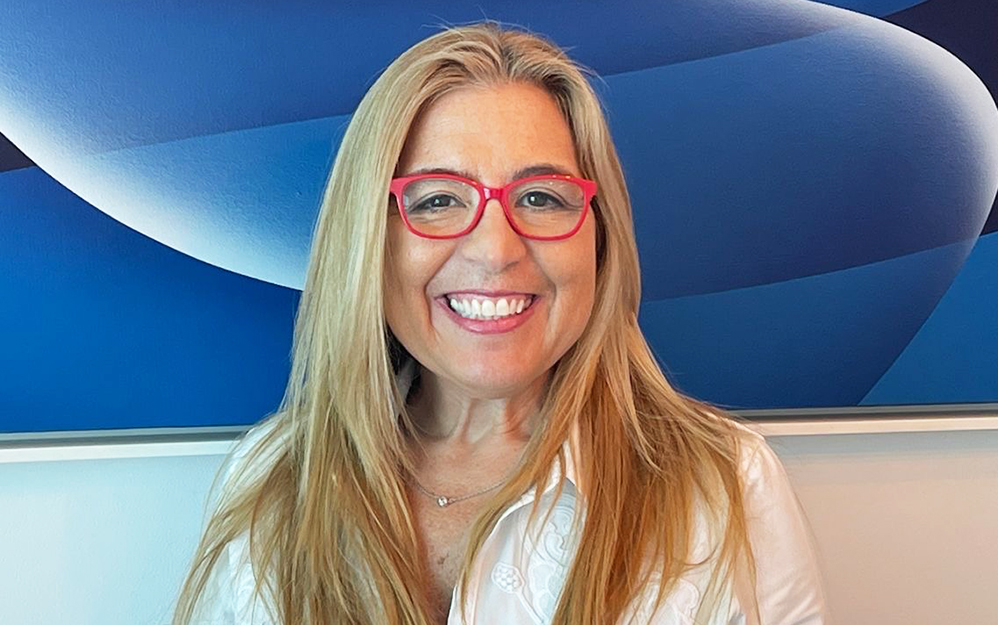
Roxana Rotundo de VIP 2000 TV: “YouTube se ha convertido en un gran aliado”

12 de septiembre de 2025



9 de mayo de 2025
VIP 2000 TV Brings Its First Vertical Series to LA Screenings
