U.S. HISPANIC Versión en español
Alias Cóndor: Four Podcast Episodes Telling The Stories Of Latin American Soldiers Fighting In Ukraine
Cynthia Plohn | 2 de octubre de 2026
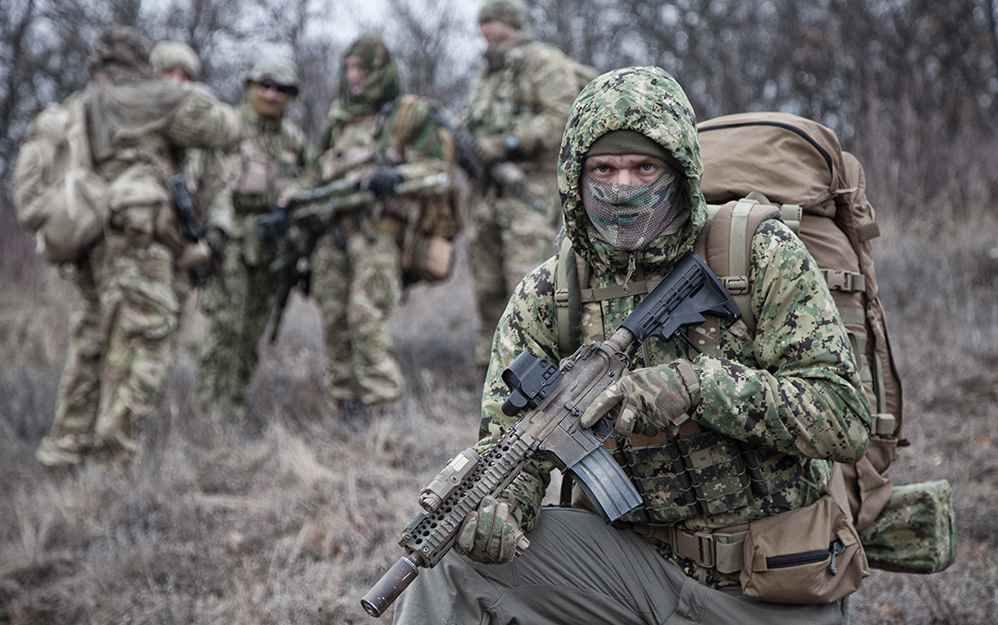
Carolina Chimoy documented how thousands of Latin American soldiers are fighting in Ukraine and how they have adapted to the country’s society and way of life
Through a new four-episode podcast, co-produced by DW, Futuro Studios, and LA Times Studios—with its first episode released on Wednesday the 23rd—journalist Carolina Chimoy delves into the lives of Latin American soldiers who have traveled to Ukraine to fight in a war far from home. Through their stories, she explores what brought them to the front lines, how they experience the war, and what they find there: violence, fear, and loss, but also belonging, purpose, and even love. It also poses a central question: what drives someone to risk their life for a country that is not their own?
As part of her coverage, Chimoy documented not only how thousands of Latin American soldiers are fighting in a war that isn’t theirs, but also how they have adapted to Ukraine’s society, climate, and way of life. Through the personal stories of “Cóndor” and other Latin American soldiers with whom she built relationships of trust over years, Carolina’s work transports listeners to the harsh reality of the trenches, as well as to the most human moments of relief and even happiness these soldiers experience.
With this podcast, Carolina’s work alongside the teams at DW, Futuro Studios, and LA Times Studios reveals for the first time a story never before reported with this level of access and detail about how these thousands of Latin American soldiers are playing a key role in the war and shaping the reality of Ukrainians in their own country.
Through the account of its protagonist—a combatant nicknamed “Cóndor”—and his brothers-in-arms, the investigation explores how these men and women experience fear, loss, belonging, and even love amid the conflict.
“When Carolina and I sat down to write the pitch to send to LA Times Studios and Futuro, the four episodes just came naturally from the material she had. Some of the specific details in those episodes have changed or been moved around, but I think right from the start it felt like a four-part series. I am a firm believer in not making extra episodes just to fill space, but rather letting the story itself guide you on how long the episodes and the series should be,” explained Sam Baker, Audio Team Lead | Format Development at DW.
She added that this story was Carolina’s find, so there was never any doubt about who would host it. She kept running into these Latin American soldiers in Ukraine and knew right away that there was something unique, something deeper to this story. “She got to know many of them very well, and they trusted her—and only her—to tell their stories. This is Carolina’s first podcast, but with her television background, she is a very skilled storyteller; she writes incredible scripts and knows how to deliver them with tact and charisma. I couldn’t have imagined this podcast any other way,” she said.
EPISODE 1: FROM SOCIALIST IDEAL TO THE TRENCHES
The story begins with Cóndor’s background, having been raised in an environment where Russia and Cuba still evoked sympathy among the generations of the 1960s and 70s—like his own mother—for whom they represented a socialist ideal. When Russia invaded Ukraine in 2022, people around him even spoke of a “liberation.” However, Cóndor made a drastic decision: to travel to the front line, rifle in hand, ready to put his life on the line. The first episode explores his life before the war and the reasons that led him to leave everything behind.
EPISODE 2: NO LANGUAGE AND NO EXPERIENCE ON LINE ZERO
Without knowing anyone and unable to speak or read the language, Cóndor arrives in Ukraine full of questions about the conflict and the David vs. Goliath narrative. After researching the historical context and having never held a rifle in his life, he enlists in the Ukrainian army. Following his initial training, he is sent to “Line Zero”—the direct front line with the enemy in the eastern part of the country. Alongside “Panamá,” another Latin American soldier, he lives through harrowing and poignant moments that alter his perspective forever.
EPISODE 3: LOVE AND BONDS WITH THE UKRAINIAN PEOPLE
The conflict has also made room for unexpected stories. After his time in the trenches, Panamá meets a Ukrainian woman, falls in love, and travels to the other side of the country to meet her family and immerse himself in her culture and traditions. Like him, several Latin American soldiers express their intent to stay in Ukraine even after the war ends. The bond between the two cultures has grown to such an extent that Ukrainian commanders state the war would look very different without the presence of Latin American combatants.
EPISODE 4: A SEARCH BEYOND MONEY
While financial compensation is often the quick answer, the series reveals that deeper motivations go far beyond money. Are they searching for a better future? Is it an escape from the Latin American reality? Or are they pursuing the dream of feeling valued by society, just as soldiers are perceived and treated in Ukraine?
The final episode delves into the personal history and motives that led Cóndor and his comrades not only to fight, but to seek peace in a war-torn country.
“When Carolina and I sat down to write the pitch to send to LA Times Studios and Futuro, the four episodes just came naturally from the material she had. Some of the specific details in those episodes have changed or been moved around, but I think right from the start it felt like a four-part series. I am a firm believer in not making extra episodes just to fill space, but rather letting the story itself guide you on how long the episodes and the series should be,” the executive analyzed.

Empresas


Diario de Hoy
|
viernes, 2 de octubre de 2026 |
Noticias relacionadas (3)
28 de septiembre de 2026
Alias Cóndor muestra el lado humano de los latinoamericanos que luchan en Ucrania